Keeping a dog active can be difficult when weather, limited outdoor space, or a busy schedule gets in the way. A budget treadmill can provide a controlled way to add walking or running time indoors.
These 10 dog treadmills under $100 focus on practical features such as quiet motors, remote controls, safety side panels, compact designs, and displays that help owners manage daily exercise.
Best 10 Dog Treadmills Under 100 Picks for 2026
Quiet Smart Pick

- Below-45 dB quiet motor
- LCD tracks workout metrics
- Converts for human use
Best For: Small- to medium-sized dogs needing quiet indoor exercise
Rehabilitation-Friendly Choice
Remote-Controlled Dog Treadmill
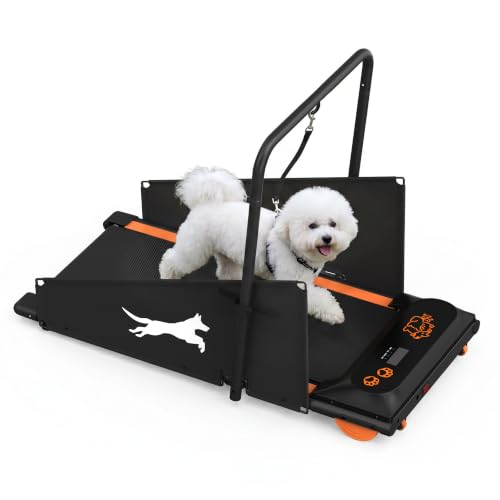
- 0.5-4 mph adjustable speed
- Cushioned shock-absorbent belt
- 12 programs with remote control
Best For: Gentle walking, conditioning, and supervised rehabilitation
Dual-Purpose Value
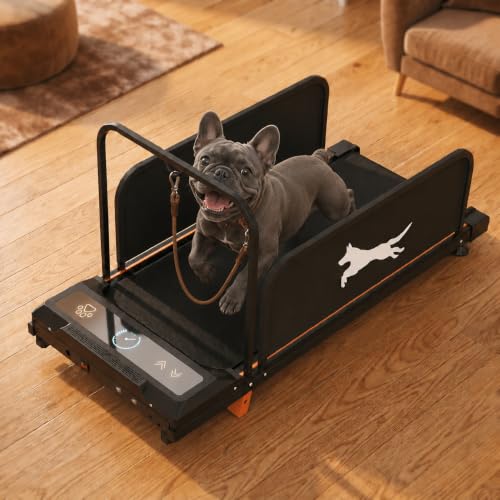
- Pet and human workout design
- Quiet 2.5 HP motor
- LCD time, speed, and distance display
Best For: Owners sharing one treadmill with a small or medium dog
Safety-Focused Option
Lifepro PawRunner Dog Treadmill

- Safety key and emergency stop
- Remote-controlled everyday exercise
- 130-pound recommended capacity
Best For: Small and medium dogs needing supervised indoor workouts
Quiet Health Pick
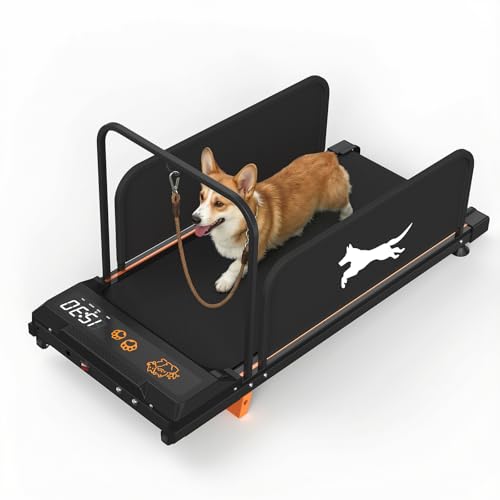
- Quiet motor for indoor exercise
- Remote control and emergency stop button
- Foldable design with a roomy running area
Best For: Small and medium dogs needing regular indoor exercise
Versatile Value Pick
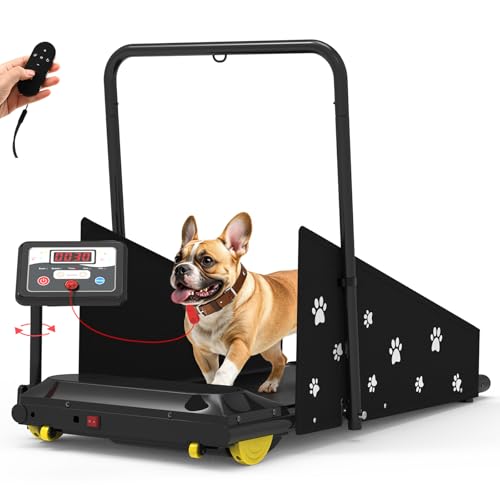
- Low 0.5-mph starting speed
- Rotatable display and remote control
- Can convert for human treadmill use
Best For: Small and medium dogs and multipurpose home workouts
Quiet Compact Pick

- Under-45-dB motor for indoor use
- LED display tracks time, speed, and distance
- Rolling wheels and removable panels add flexibility
Best For: Small and medium dogs needing quiet daily exercise
Versatile Budget Pick
4-in-1 Dog Treadmill for Small and Medium Dogs

- 0.6–5.0 MPH speed range with two manual incline levels
- Remote control, LCD tracking, and safety key included
- Vibration function, wheels, and removable armrests
Best For: Multifunctional indoor exercise in compact homes
Comfort-Focused Choice
Quiet 4-in-1 Dog Treadmill with Vibration

- 6-layer belt designed to reduce joint impact
- Magnetic safety key and side panels add protection
- Phone holder, LCD display, vibration, and transport wheels
Best For: Gentler daily exercise and small-space living
Speed Range Pick
PETSITE Dog Treadmill with 7.5 MPH Top Speed

- 0.5–7.5 MPH speed range with three incline levels
- Quiet motor rated below 45 dB
- Shock-absorbing belt, LCD, remote, and 2-in-1 design
Best For: Progressive workouts requiring more speed flexibility
Quiet Smart Pick – Adjustable Dog Treadmill
If you’re comparing dog treadmills under 100, this quiet smart model stands out for small and medium dogs that need steady indoor exercise. Its 2.5 HP motor, adjustable speed, LCD tracking, and foldable design make it practical for home use, though buyers should verify the current price and the treadmill’s fit for their dog.
Best For: Small- to medium-sized dogs and households that want a quiet, space-conscious exercise option.
Pros:
- Quiet motor operates below 45 dB for less household disturbance.
- LCD display tracks time, speed, and distance.
- Removable side panels and armrests allow one-person treadmill use.
- Foldable design and 220-pound stated weight capacity add versatility.
Cons:
- Its 35.43-by-14.76-inch belt may be limiting for larger or long-striding dogs.
- The listing includes a relatively short three-month warranty.
This is a versatile choice when quiet operation and dual-purpose use matter most. Measure your dog carefully, and remember that the listed 220-pound capacity does not necessarily indicate the ideal walking space for every dog at that weight.
Rehabilitation-Friendly Choice – Remote-Controlled Dog Treadmill
Among dog treadmills under 100, this model is worth considering for controlled walking and gradual training. It offers a 0.5-to-4 mph range, a cushioned belt, shock absorption, 12 preset programs, and remote control, but shoppers should confirm the current price before buying.
Best For: Small and medium dogs needing adjustable walking, conditioning, or gentle rehabilitation exercise.
Pros:
- Low 0.5 mph starting speed supports slow walking sessions.
- Cushioned, shock-absorbent belt is designed for lower-impact exercise.
- Remote control allows speed and timing adjustments from a distance.
- LCD display and 12 preset programs support structured workouts.
Cons:
- The 4 mph maximum is better suited to walking and moderate jogging than fast running.
- The 14.2-inch belt width may not suit every medium-sized dog.
- Medical or post-surgery use should be guided by a veterinarian.
Its wide speed range and remote operation make it one of the more training-focused options in this group. The cushioned deck adds appeal for gentle sessions, but careful supervision and professional guidance remain important for recovering dogs.
Dual-Purpose Value – Small Dog Treadmill
This dual-purpose option broadens the appeal of dog treadmills under 100 by combining pet exercise with a human under-desk walking setup. It includes side panels, a quiet 2.5 HP motor, LCD tracking, and a stated 220-pound capacity; check the current price and confirm the belt size suits your dog.
Best For: Small to medium dogs and owners who want one compact treadmill for pet and personal workouts.
Pros:
- Quiet motor operates below 45 dB for indoor use.
- Removable side panels support both pet and human workouts.
- LCD display monitors time, speed, and distance.
- Steel frame and 220-pound stated capacity provide a stable platform.
Cons:
- The 35.43-by-14.76-inch running area may feel narrow for some dogs.
- The available listing details do not clearly specify a full speed-control range.
- At 46 pounds, it may not be especially convenient to move frequently.
The main advantage is flexibility: the treadmill can serve both your dog and your household. Its enclosed side panels may also help keep a hesitant dog centered, but proper acclimation and close supervision are still needed.
Safety-Focused Option – Lifepro PawRunner Dog Treadmill
For shoppers browsing dog treadmills under 100, the Lifepro PawRunner offers a more established feature set for small and medium dogs. It includes remote control, a safety key, an emergency stop button, a 0.5-to-7.5 MPH stated speed range, and a 130-pound recommended capacity, subject to current pricing.
Best For: Small and medium dogs whose owners prioritize remote operation, safety controls, and everyday indoor exercise.
Pros:
- Safety key and emergency stop button add important control features.
- Remote control supports exercise when the owner is occupied.
- Quiet motor is designed for in-home use.
- Includes a 38.6-by-14.2-inch running surface and 0.5-to-7.5 MPH stated range.
Cons:
- Recommended for pets up to 130 pounds, so it is not intended for large dogs.
- The listing contains inconsistent speed specifications, so buyers should verify operating details.
- Its 48-by-22.8-inch footprint may require more floor space than compact models.
The PawRunner is a sensible pick when safety features and remote control rank above maximum capacity. Measure your dog against the stated length and height guidance, and review the manual for setup, leash, and crossbar instructions before use.
Quiet Health Pick – KWOJU Smart Dog Treadmill
For shoppers comparing dog treadmills under 100, the KWOJU Smart Dog Treadmill stands out for its quiet operation, foldable design, and roomy running surface. It includes remote speed control, an emergency stop button, and a 41.34-by-15.75-inch running area for small and medium dogs.
Best For: Small and medium dogs needing regular indoor walking, jogging, or running exercise.
Pros:
- Ultra-quiet motor designed for in-home use
- Remote control supports convenient speed adjustments
- Foldable, wheeled design simplifies storage
- Emergency stop button adds a safety feature
Cons:
- Intended for small and medium dogs rather than large dogs
- Assembly is required, although the product notes estimate about 10 minutes
Its combination of a spacious deck, LCD display, manual incline, and compact storage makes it a practical option when indoor exercise and household noise are major concerns.
Versatile Value Pick – CIIHI 2-in-1 Dog Treadmill
Among dog treadmills under 100, the CIIHI model is notable for its low-speed range, rotatable display, and 2-in-1 design. It offers remote or console controls, side panels, a safety key, and a 36.22-by-14.17-inch belt for indoor pet workouts.
Best For: Small and medium dogs, or households that want a treadmill that can also be used by a person.
Pros:
- 0.5-to-4.0-mph range supports slower walking sessions
- 360-degree rotatable display is readable from different angles
- Removable panels and armrests allow human treadmill use
- Wheels make repositioning easier
Cons:
- The running belt is smaller than the deck on some full-size treadmills
- Removing panels and armrests is needed for the alternate use mode
The CIIHI is a flexible choice for owners who value gradual exercise speeds, easy monitoring, and a machine that can serve more than one purpose.
Quiet Compact Pick – Indoor Dog Pacer Treadmill
For dog treadmills under 100 aimed at compact indoor use, this dog pacer treadmill combines a quiet motor, rolling wheels, and a removable-panel design. Its LED display tracks time, speed, and distance, while the 35.4-by-14.7-inch belt is sized for small to medium dogs.
Best For: Small and medium dogs needing quiet, routine exercise in the home.
Pros:
- Motor is rated under 45 dB for quieter indoor workouts
- LED display tracks key workout metrics
- Rolling wheels support easier movement around the room
- Removable panels and armrests provide added versatility
Cons:
- The running belt is designed for smaller dogs, not large breeds
- The supplied notes list a 12-km/h maximum speed rather than a speed range
Its 39-pound steel construction, quiet operation, and mobility-focused design make it a sensible fit for owners who want a straightforward exercise machine that is easier to move and monitor.
Versatile Budget Pick – 4-in-1 Dog Treadmill for Small and Medium Dogs
For shoppers comparing dog treadmills under 100, this 4-in-1 model stands out for combining indoor exercise, vibration, and occasional single-person use in one compact machine. Its 0.6–5.0 MPH speed range, manual incline, remote control, and rolling wheels make it practical for varied home workouts.
Best For: Small- and medium-dog owners who want a multifunctional treadmill with a high stated weight capacity and space-saving storage.
Pros:
- Includes treadmill, shaking function, and removable-armrest single-person use.
- Offers 0.6–5.0 MPH adjustable speed and two manual incline levels.
- Includes a remote, LCD display, safety key, and front leash crossbar.
- Wheels and removable armrests make repositioning and storage easier.
Cons:
- The 35.43-by-15.75-inch belt may be limiting for larger or long-strided dogs.
- Incline adjustment is manual rather than powered.
- The product is relatively heavy at 36.4 pounds for frequent carrying.
This is a feature-packed option for households that want more than a basic pet treadmill. Before buying, check that the running-belt dimensions suit your dog’s stride, even though the listed maximum weight recommendation is 265 pounds.
Comfort-Focused Choice – Quiet 4-in-1 Dog Treadmill with Vibration
This model is a strong contender among dog treadmills under 100 for owners prioritizing a gentler running surface and simple home storage. It pairs a 6-layer belt with 0% or 2% manual incline settings, vibration, an LCD display, and a phone holder for helping a dog settle into exercise.
Best For: Small- and medium-dog households seeking cushioning features, a compact design, and multiple ways to support routine indoor activity.
Pros:
- The 6-layer running belt is designed to reduce impact on knees and ankles.
- Side panels and a magnetic safety key provide added workout protection.
- Includes vibration, 0%/2% manual incline, LCD tracking, and a phone holder.
- Transport wheels support easier movement in apartments and smaller rooms.
Cons:
- Its top speed is 5 MPH, which may not suit dogs needing faster running.
- Only two incline settings are available, and both are manual.
- The listed warranty is six months.
With a 265-pound stated weight recommendation and a belt intended to soften impact, this treadmill emphasizes accessible, controlled exercise rather than advanced conditioning. Measure your dog and review the belt dimensions before purchase.
Speed Range Pick – PETSITE Dog Treadmill with 7.5 MPH Top Speed
Among dog treadmills under 100, the PETSITE model is notable for its broader 0.5–7.5 MPH speed range and three-level adjustable incline. It also adds a shock-absorbing, anti-slip belt, LCD workout metrics, a remote control, and a 2-in-1 design for indoor exercise.
Best For: Small- and medium-dog owners who want more speed and incline flexibility for progressive workouts.
Pros:
- Provides a 0.5–7.5 MPH speed range and three incline levels.
- The motor is rated at under 45 dB for quieter operation.
- Anti-slip, shock-absorbing belt supports a steadier, joint-conscious stride.
- Removable panels and handle allow compact single-treadmill use.
Cons:
- The 220-pound weight recommendation is lower than the other listed models.
- At 47.5 inches deep and 42.5 pounds, it needs more space and handling effort.
- Incline adjustment is listed as adjustable but not described as powered.
This is the most conditioning-oriented option in the group, thanks to its faster top speed and three-level incline. Its 220-pound capacity and 47-inch-plus overall length make careful fit and space checks especially important.
How We Picked the Best Dog Treadmills Under 100
We focused on the features that matter most for safe, convenient indoor exercise at a lower price. The lineup includes models with remote controls, LCD or 360-degree displays, rolling wheels, adjustable speeds, side panels, and quieter motors. We also considered the stated weight limits and whether each treadmill is better suited to small dogs, medium dogs, or both.
Because specifications can vary by seller and production run, verify the current dimensions, maximum supported weight, running-area size, and return policy before ordering. A stated capacity is not a guarantee that every dog will have enough room to exercise comfortably.
Quick Comparison
- Best for basic indoor walking: A compact treadmill with simple speed controls and a remote.
- Best for nervous dogs: A low-noise model with side panels and gradual speed adjustment.
- Best for portability: A lighter design with rolling wheels or a compact frame.
- Best for added versatility: A 4-in-1 model with features such as vibration or multiple operating modes.
- Best for larger medium dogs: A model with a higher stated weight capacity and the longest usable running surface.
Key Buying Factors for Dog Treadmills Under 100
Size and Weight Capacity
Measure your dog from nose to tail and compare that length with the treadmill’s usable belt area. Dogs need enough room to walk naturally without constantly reaching the front or stepping off the rear. Choose a capacity above your dog’s current weight, while also checking the manufacturer’s recommended dog size.
Noise and Speed Control
A loud motor can make dogs reluctant to use the machine. Look for low-noise descriptions, adjustable speeds, and a remote that lets you stop or slow the belt quickly. Begin at the lowest setting and never leave a dog unattended while the treadmill is running.
Safety Features
Side panels can help some dogs remain centered, while an emergency stop function, secure power switch, and stable feet add useful protection. A leash should not be attached to a treadmill unless the manufacturer specifically permits it. Introduce the machine gradually with treats and positive reinforcement.
Storage and Controls
Rolling wheels, a compact frame, and a clear display make regular use easier. Confirm whether the remote requires batteries and whether the controls are accessible from the position where you will supervise your dog.
Who Should Buy Which Dog Treadmills Under 100?
Small dogs and puppies: Choose a compact model with a short, low-speed setting, side panels, and a running surface appropriate to the dog’s stride. Puppies should use a treadmill only with close supervision and guidance from a veterinarian or trainer.
Medium dogs: Prioritize belt length, width, stability, and a weight rating with plenty of margin. A higher-capacity model is useful only if its running area is also large enough for the dog.
Noise-sensitive dogs: Select a quiet motor, enclosed or guided running area, and gradual speed adjustment. Let the dog inspect the powered-off treadmill before beginning training.
Owners with limited storage: Look for rolling wheels and a compact design, but do not sacrifice stability or walking space merely to save floor area. For any of these Dog Treadmills Under 100, supervision, correct sizing, and slow training are more important than extra modes or accessories.