Choosing the right outdoor shelter can make a real difference for stray, feral, and porch cats during freezing weather. The best options balance insulation, wind protection, dryness, and easy access.
This roundup of insulated cat houses for winter focuses on practical features that help retain heat and stand up to snow, rain, and cold nights.
Best 10 Insulated Cat Houses for Winter Picks for 2026
EcoFlex Winter Shelter
New Age Pet Albany Outdoor Cat House

- Weatherproof ECOFLEX resists rot, mold, insects, and moisture.
- Double-wall panels and elevated floor improve winter comfort.
- Dual escape doors and tool-free setup suit colony care.
Best For: Outdoor caregivers needing a durable, low-maintenance winter shelter
Wooden Thermal Shelter

- Six-sided insulated liner and thick sponge padding add warmth.
- Waterproof elevated base and slanted roof help in wet weather.
- Large size fits multiple kittens or small pets.
Best For: Feral cats needing a roomy, heavily insulated wooden shelter
Windproof Elevated Shelter

- 900D waterproof oxford fabric supports all-weather use.
- Elevated platform and stakes improve stability outdoors.
- Sloped roof helps limit water pooling and snow buildup.
Best For: Backyard or barn setups needing quick, wind-resistant shelter
Triple-Door Winter House

- Removable insulated lining is machine washable.
- Triple-door layout helps cats escape quickly.
- Plastic shell and curtain improve weather resistance.
Best For: Small to medium cats needing a cleanable, escape-friendly winter shelter
Premium all-weather wooden shelter
All-Round Foam Insulation Cat House
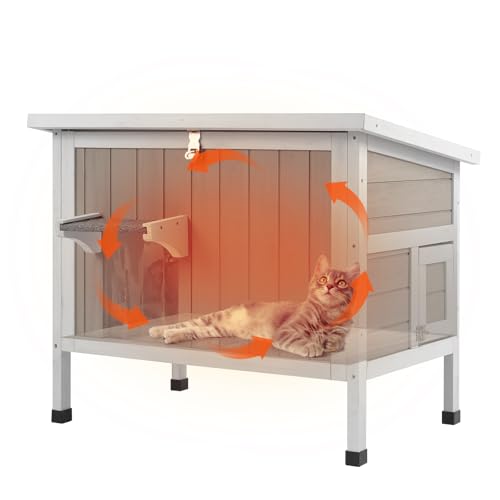
- Six-sided foam insulation helps hold warmth
- Raised base and slanted roof improve weather protection
- Lift-up roof and removable floor simplify cleaning
Best For: Outdoor cats or 1–2 small cats needing a sturdy winter shelter
Lightweight wet-weather pick
Seamless Leakproof Bottom Cat House

- Seamless bottom helps block ground moisture
- Insulated Oxford fabric retains body heat in winter
- Tool-free setup makes placement fast and easy
Best For: Quick, lightweight shelter for porches, garages, and balconies
Dual-entry winter shelter

- Insulated liner helps hold body heat in winter
- Dual-entry design includes a rear escape exit
- Raised base and asphalt roof improve weather protection
Best For: Feral or community cats needing a safer, weatherproof winter shelter
All-Around Warmth Pick
100% Insulated Outdoor Cat House for Winter

- 6-sided insulated liner for warmth
- Waterproof roof, strip, and curtain
- Washable liner cover for easier cleaning
Best For: Buyers wanting passive insulation and easy maintenance
Heated Comfort Pick
Aivituvin Heated Outdoor Cat House with Pad

- Heating pad with thermostat control
- 6-sided insulation and foam-lined walls
- Escape doors and elevated base for safety
Best For: Buyers needing active heat for cold weather
EcoFlex Winter Shelter – New Age Pet Albany Outdoor Cat House
For shoppers comparing insulated cat houses for winter, the New Age Pet Albany stands out for its weatherproof ECOFLEX build, double-wall panels, and elevated floor. It’s designed to handle damp ground, cold conditions, and seasonal changes without the warping or odor issues common in many wood shelters.
Best For: Outdoor cat caregivers who want a durable, easy-clean shelter for feral or colony cats.
Pros:
- ECOFLEX composite resists rot, mold, insects, and moisture year-round.
- Double-wall panels and elevated floor help add insulation and keep cats off cold ground.
- Dual escape doors with vinyl flaps support safer use for feral and multi-cat colonies.
- Tool-free assembly and wipe-clean surfaces make maintenance simple.
Cons:
- Heated pad is optional and sold separately.
- Interior size is better suited to small cats than very large breeds.
Overall, this is a practical long-term shelter choice if you want a winter-ready cat house that’s built for outdoor durability and simple upkeep. The 10-year warranty adds extra confidence for year-round use.
Wooden Thermal Shelter – Insulated Outdoor Cat House
If you’re shopping insulated cat houses for winter and want a more traditional shelter, this wooden outdoor cat house focuses heavily on warmth. Its insulated liner wraps all six sides, while the thick sponge padding is designed to help hold in body heat during colder nights.
Best For: Feral cats or outdoor pets that need a roomy, heavily insulated wooden shelter.
Pros:
- Six-sided insulated liner and 0.78″ sponge padding are built for warmth.
- Elevated waterproof base and slanted roof help manage rain and snow.
- Large interior can accommodate multiple kittens or small pets.
- Wood construction gives it a sturdy shelter feel for outdoor use.
Cons:
- Wood shelters generally require more care than plastic or composite designs.
- Larger footprint may be less convenient in tight spaces.
As a winter shelter, this model is aimed at maximizing insulation and dryness rather than minimizing maintenance. It’s a solid pick if your priority is a warmer, roomier refuge for outdoor cats.
Windproof Elevated Shelter – Insulated Feral Cat House
Among insulated cat houses for winter, this elevated fabric shelter is designed for quick setup and better weather protection. The 900D waterproof oxford fabric, moisture-proof base, and sloped roof work together to help keep water from pooling while the raised platform and stakes improve stability outdoors.
Best For: Backyard or barn use where easy setup and wind resistance matter.
Pros:
- 900D waterproof oxford fabric improves weather resistance on all sides.
- Elevated platform and ground stakes help with wind resistance and water control.
- Sloped roof helps prevent snow buildup and pooling.
- No-tools assembly makes it quick to set up.
Cons:
- Fabric shelters may feel less rigid than wood or plastic houses.
- Best suited to cats comfortable with a softer, more flexible structure.
This is a good practical option if you want a portable winter shelter that’s straightforward to assemble and place in exposed areas. Its main strength is weather management, especially when you need a simple outdoor setup.
Triple-Door Winter House – Plastic Insulated Cat Shelter
For buyers looking at insulated cat houses for winter, this plastic shelter offers a removable insulated lining, a wind-blocking door curtain, and a triple-door layout. The combination is meant to create a warm indoor-style refuge while still letting cats move in and out freely.
Best For: Small to medium outdoor cats that need an easy-to-clean, escape-friendly shelter.
Pros:
- High-density foam and PVC-coated insulated lining are removable and machine washable.
- Triple-door design helps prevent entrapment and supports quick escape.
- Thick plastic construction and PVC curtain add weather resistance.
- 15-minute assembly is a plus for fast setup.
Cons:
- No manufacturer warranty is listed.
- Best for 1-2 cats, so it may feel limited for larger colonies.
This model makes sense if you want insulation plus easy cleaning in a sturdier, low-fuss shell. Its escape-door layout also makes it a smart fit for cats that need a safer outdoor shelter.
Premium all-weather wooden shelter – All-Round Foam Insulation Cat House
If you want insulated cat houses for winter that feel more like a permanent outdoor shelter than a temporary cover, this wooden model is built for serious cold-weather use. Its full foam insulation, raised base, and weather-shedding roof are designed to help keep heat in and drafts, rain, and snow out.
Best For: Outdoor cats, feral cats, or small cat groups that need a sturdy insulated shelter with easier access for cleaning.
Pros:
- Full foam insulation on all six sides with a durable 3-layer fir wood build
- Slanted asphalt roof and elevated base help shed precipitation and keep the floor drier
- PVC curtain front door plus a lockable escape door for added safety
- Lift-up roof and removable floor make cleaning and bedding changes simpler
Cons:
- Weighs 31 pounds, so it is less portable than soft-sided shelters
- Assembly is required, even though pre-drilled holes help
- Interior size is best suited to 1–2 small cats rather than larger groups
This is a strong pick if you want a more rigid, weatherproof winter setup with insulation built into the structure itself. It balances warmth, protection, and everyday practicality well for yards, porches, or other exposed spots.
Lightweight wet-weather pick – Seamless Leakproof Bottom Cat House
For buyers comparing insulated cat houses for winter, this soft-sided shelter stands out for its waterproof construction and easy setup. The seamless roof and bottom are meant to block moisture better than stitched floors, while the insulated inner layer helps the house retain body heat in cold conditions.
Best For: People who want a lightweight, tool-free winter shelter for garages, porches, barns, or balconies.
Pros:
- Seamless roof and bottom design helps prevent water seepage
- High-density, water-resistant Oxford fabric with insulated lining for cold weather
- Tool-free assembly with strong velcro fasteners
- Includes a soft, removable mat for added comfort
Cons:
- Soft-sided design may not feel as rigid as a wooden shelter
- Comfort depends on the included mat and the shelter’s placement
- Best suited to cats that fit comfortably within its spacious but enclosed layout
This is a practical option if you value portability, quick assembly, and strong wet-weather protection. It makes the most sense in semi-sheltered areas where a lightweight insulated shelter is easier to place and move as needed.
Dual-entry winter shelter – Insulated Wooden Cat House
This insulated wooden shelter is a solid choice if you want insulated cat houses for winter with a safer dual-entry layout. Its built-in insulated liner, raised base, and weather-shedding asphalt roof are all aimed at helping outdoor and feral cats stay drier and warmer in cold, exposed spaces.
Best For: Feral cats, community cat stations, or porch-and-patio setups that benefit from a rear escape exit.
Pros:
- Built-in insulated liner helps block cold air and hold body heat
- Front door and rear escape exit add safety for cats in outdoor areas
- Raised base helps keep the floor drier off damp ground
- Hinged asphalt roof opens for easy checks and bedding refills
Cons:
- Assembly is required and the notes indicate it may take 1–2 people
- Blankets, pads, straw, and reflective foil are not included
- Interior size is better suited to extra-small and small cats
If safety and weather protection are the priority, this model covers the basics well without overcomplicating setup. It works especially well in spots where you may want to use the shelter as both a resting place and a protected feeding station.
All-Around Warmth Pick – 100% Insulated Outdoor Cat House for Winter
If you want insulated cat houses for winter that focus on blanket-like warmth without adding electronics, this model is built around a thick, all-sided liner and double-layer walls with an air cavity to help slow heat loss. It also adds waterproofing, an escape door, and easy-clean materials, making it a practical shelter for outdoor and feral cats in cold, wet conditions.
Best For: Cat owners who want a fully insulated, easy-to-clean winter shelter with an escape route.
Pros:
- 6-sided insulated liner helps trap warmth all around the shelter
- Double-layer wall design is meant to reduce heat loss in winter
- Machine-washable liner cover makes cleaning simpler
- Waterproof roof, strip, and PVC curtain add weather protection
Cons:
- No built-in heating pad, so warmth depends on insulation alone
- Assembly is required
- Large footprint may not suit very tight spaces
This is a solid pick for buyers prioritizing passive insulation, weather resistance, and low-maintenance cleaning. The escape-door design is especially useful for outdoor cats that need a quick exit while still staying sheltered from winter conditions.
Heated Comfort Pick – Aivituvin Heated Outdoor Cat House with Pad
Among insulated cat houses for winter, this heated shelter stands out because it combines 6-sided insulation with a UL-tested heating pad and thermostat control. The result is a more actively warmed space for one to three cats, plus weatherproof features like an entrance curtain, elevated base, and escape doors for added outdoor protection.
Best For: Owners who want a heated winter shelter for multiple outdoor or stray cats.
Pros:
- Includes a heating pad with built-in thermostat for automatic regulation
- 6-sided insulated liner and foam-lined walls help retain heat
- Openable roof makes cleaning and access easier
- Escape doors, elevated base, and slanted roof improve outdoor safety
Cons:
- Requires access to power for the heating pad
- Wood structure may have a temporary odor after shipping
- Heavier than plastic shelters
This is the strongest choice here if your main priority is reliable winter warmth rather than just insulation alone. The combination of insulation, heating, and safety-focused design makes it especially useful in below-freezing conditions.
Budget-Friendly Shelter Pick – Weatherproof Outdoor Cat House with Escape Door
If you’re comparing insulated cat houses for winter and want a simpler shelter with strong weather protection, this HDPE model offers a thick double-layer build, rain curtain, and raised legs to keep cats off cold, wet ground. It doesn’t include a heater, but its easy-clean surface and tool-free setup make it appealing for porches, barns, and yard use.
Best For: Buyers who want a durable, low-maintenance winter shelter without a built-in heater.
Pros:
- Double-layer HDPE construction is designed for wind, rain, and snow protection
- Side escape door adds a safety exit for feral cats
- Raised legs help keep the shelter off damp ground
- Tool-free assembly and wipe-clean surface simplify setup and care
Cons:
- No insulated liner or heating pad is listed
- Smaller footprint may be limiting for larger cats or multiple adults
- Less cushioned interior than lined or heated shelters
This model makes sense if you want a tough, straightforward outdoor shelter that prioritizes weather resistance and easy handling. It is best viewed as a durable cold-weather enclosure rather than a fully insulated or heated winter house.
How We Picked These Insulated Cat Houses for Winter
We prioritized shelters built to handle cold conditions without sacrificing safety or convenience. That means insulation, elevated or sealed bases, weather-resistant materials, and escape-door designs where available. We also looked for sizes that work for single cats, multi-cat setups, or community feeding areas.
Setup matters too. A good winter shelter should be sturdy enough for outdoor use, but simple enough to assemble, clean, and reposition when needed.
Quick Comparison: What Matters Most
If you want the warmest setup, look for layered insulation, a snug entry point, and a design that limits drafts. If your priority is durability, choose heavy-duty plastic, treated wood, or composite materials with waterproof construction. For easier maintenance, removable liners or wipe-clean interiors are a major plus.
Key Buying Factors for Insulated Cat Houses for Winter
Insulation and Heat Retention
The best Insulated Cat Houses for Winter reduce heat loss from the floor, walls, and roof. Foam insulation, thermal liners, and enclosed designs can help trap body heat and protect cats from wind chill.
Weatherproofing
Look for sealed seams, raised floors, waterproof exteriors, and leak-resistant bottoms. These features matter as much as insulation because a wet shelter loses warmth quickly.
Entrance Design
A smaller doorway, flap, or escape-door layout can improve warmth while still giving cats a safe way out. Multiple exits may help in high-traffic areas or where predators are a concern.
Placement and Elevation
An elevated base helps keep the shelter above snowmelt and damp ground. If possible, place the house in a sheltered area near a wall, under a deck, or out of prevailing wind.
Size and Comfort
Choose a house that is large enough for the cat to turn around, but not so large that it becomes hard to warm. In colder climates, a tighter interior space is usually more efficient.
Who Should Buy Which Insulated Cat Houses for Winter?
Choose a simple weatherproof shelter if you want an affordable, low-maintenance option for a single cat. Pick a more heavily insulated or multi-level design if you need better thermal performance or room for larger cats. If you live in an extreme climate, a heated model may be worth considering, but only if you can provide safe outdoor power and follow all safety instructions.
For most buyers, the best choice is the shelter that combines insulation, dryness, and a draft-resistant entrance with a layout that fits your outdoor space and the cats you’re protecting.