Cat doors with selective entry and exit give your pet freedom while helping keep other animals out. They’re a smart upgrade for homes that need more control than a standard flap.
In this roundup, we focused on locking options, access methods, installation fit, and the convenience features that matter most in daily use.
Best 10 Cat Doors with Selective Entry and Exit Picks for 2026
Magnetic Selective Entry Cat Flap
PetSafe Deluxe 4-Way Locking Cat Flap

- Uses a magnetic key collar for selective access.
- Offers in only, out only, fully open, and fully closed modes.
- Built to help keep wild animals and other pets out.
Best For: Simple magnetic access control for small cats
Window Insert With 4 Locks

- Fits 24"-28" sliding windows with no wall damage.
- Includes out only, in only, in & out, and locked settings.
- Uses an aluminum alloy frame with weather-sealing materials.
Best For: Renters who need a non-destructive window cat door
Microchip Selective Entry Flap
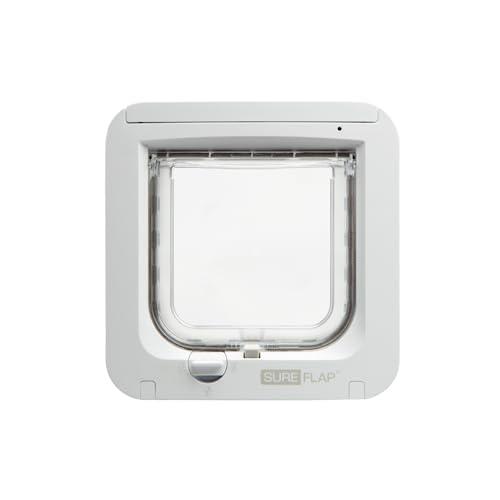
- Reads compatible implanted microchips for entry control.
- Learns up to 32 pet identities with one-button programming.
- Installs in doors, windows, or walls with accessories.
Best For: Microchip homes that want entry-only selective access
App-Controlled Selective Access
PetSafe SmartDoor Connected Pet Door

- App-enabled door with remote lock and unlock.
- Supports selective entry and exit with pet schedules.
- Works with the included key and compatible microchip pairing.
Best For: Multi-pet homes that want remote scheduling and control
Smart Selective Access
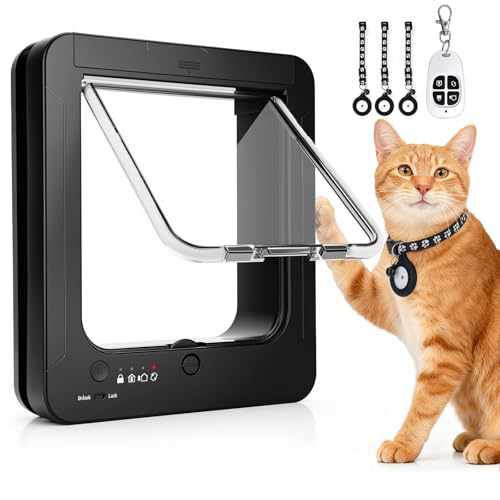
- 3 collar sensor keys included
- 4-way lock: locked, unlocked, enter, exit
- Remote control for quick access changes
Best For: Homes wanting RFID selective access and remote control
Microchip-Control Access

- Reads programmed pet microchips
- 4-way lock includes enter-only and exit-only
- Magnetic latches help block drafts
Best For: Multi-pet homes wanting microchip-based selective access
Remote Selective Access
Smart Cat Door with 5 Tag Keys

- 5 collar tag keys included
- 4 modes: in only, out only, both, locked
- Remote control for easy switching
Best For: Cat and small-dog homes wanting tag-based access control
Smart Access Upgrade
Electronic Selective Access Cat Door

- Recognizes only registered collar tags
- Includes 2 collar keys plus a remote
- 4-way lock helps control pet movement
Best For: Tech-focused selective access with stronger pet screening
Magnetic Selective Entry Cat Flap – PetSafe Deluxe 4-Way Locking Cat Flap
If you want cat doors with selective entry and exit that still keep unwanted animals out, this magnetic flap is a straightforward option. It only opens for pets wearing the matching magnetic key collar, and the 4-way lock gives you control over whether your cat can come and go or stay in.
Best For: Homes that want a simple magnetic cat door with flexible in-only, out-only, open, and fully locked settings.
Pros:
- Selective access for pets wearing the magnetic key collar.
- 4-way locking modes: fully open, fully closed, in only, or out only.
- Designed to help keep wild animals and other pets out.
- Fits installations up to 5 cm thick.
Cons:
- Requires the magnetic key collar for access.
- Best suited to small cats up to 7 kg.
This is a practical, no-frills choice if you want controlled access without app controls or microchip programming. It focuses on basic selective entry and exit while keeping setup simple.
Window Insert With 4 Locks – Adjustable Cat Window Door
For cat doors with selective entry and exit in a rental-friendly format, this window insert is worth a look. It installs in sliding window tracks without damaging walls or windows, and the four locking modes let you set access to in only, out only, both directions, or fully locked.
Best For: Renters or window setups that need an adjustable, non-destructive cat door with directional locking.
Pros:
- Adjusts to fit 24″-28″ windows.
- Four locking modes: out only, in only, in & out, and fully locked.
- Aluminum alloy frame with clear panel and weather-sealing materials.
- Quick installation and removal without damaging the window.
Cons:
- Designed specifically for sliding windows, not standard doors.
- Maximum thickness support is limited to the listed window fit range.
This is a practical solution if you want controlled cat access without cutting into a door or wall. The adjustable frame and weather-resistant build make it especially useful for temporary or seasonal use.
Microchip Selective Entry Flap – SureFlap White Cat Door
If your priority is cat doors with selective entry and exit at the entry side, this microchip flap is built to recognize your cat rather than use a collar key. It reads compatible implanted microchips, allows up to 32 identities, and helps prevent stray animals from coming in.
Best For: Cat owners who want microchip-based selective entry to stop intruder animals from entering.
Pros:
- Reads compatible implanted microchips for selective entry.
- Can learn up to 32 pet identities.
- Simple one-button programming.
- Can be installed in doors, windows, or walls with accessories.
Cons:
- Only screens on entry, not on exit.
- Requires compatible microchip numbers or separate collar tags.
This is a strong pick if you want entry control based on a cat’s microchip instead of a wearable key. It is best for keeping outsiders out while giving your own cat reliable access.
App-Controlled Selective Access – PetSafe SmartDoor Connected Pet Door
For cat doors with selective entry and exit that you can manage remotely, this connected SmartDoor adds app control, scheduling, and notifications. It only opens for your pets, and you can pair it with the included medium key or your cat’s microchip for more tailored access.
Best For: Multi-pet homes that want app-based control, schedules, and remote locking.
Pros:
- App control lets you lock and unlock from anywhere.
- Selective entry and exit helps keep wildlife out.
- Custom schedules can be set for each pet.
- Notifications track use, lock status, and battery status.
Cons:
- Requires app use for the full feature set.
- Maximum thickness support is limited to 1.5 inches.
This is the most feature-rich option in the group and suits owners who want more than a basic flap. If remote control and scheduling matter, it offers a highly flexible way to manage pet traffic.
Smart Selective Access – Smart Cat Door with RFID Keys
If you want cat doors with selective entry and exit for an interior or exterior setup, this smart flap adds keypad-free control through RFID collar keys and a remote. It supports up to 20 pounds and includes a 4-way locking system, so you can decide whether your cat can enter, exit, both, or neither.
Best For: Households that want RFID-based selective access with remote control and a fully lockable cat door.
Pros:
- Uses 3 collar sensor keys plus 1 remote control for selective access.
- Offers 4 locking settings: locked, unlocked, enter, or exit.
- Made from ABS plastic with a black frame for interior or exterior use.
- Rated for cats up to 20 pounds.
Cons:
- Requires collar sensor keys for access control.
- Designed for cats and small pets up to the stated weight limit.
For buyers who want a controlled pet flap without relying on a microchip system, this model keeps the setup simple while still offering flexible entry management. The included remote adds convenience, and the 4-way lock gives you basic day-to-day control.
Microchip-Control Access – PetSafe Microchip Cat Door
This is one of the most straightforward cat doors with selective entry and exit if you want pet-only access based on a programmed microchip. It reads your cat’s 15-digit microchip ID and adds a manual 4-way lock, so you can switch between locked, unlocked, enter only, or exit only as needed.
Best For: Multi-pet homes that want microchip-based access with manual enter-only and exit-only options.
Pros:
- Reads a cat’s unique 15-digit microchip ID for selective access.
- Supports up to 40 programmed pets, including optional collar keys sold separately.
- Manual 4-way lock includes enter only and exit only settings.
- Magnetic latches and weather stripping help reduce drafts.
Cons:
- Installation in metal, glass, brick, or walls needs additional accessories.
- Collar keys for non-microchipped cats are sold separately.
For shoppers prioritizing pet-specific entry control, this PetSafe model stands out because it combines microchip recognition with a true selective entry and exit lock. The added draft-blocking features make it a practical pick for interior or exterior doors.
Remote Selective Access – Smart Cat Door with 5 Tag Keys
For cat doors with selective entry and exit that also work well for small dogs, this white smart flap uses paired collar tag keys and a remote to manage access. It offers four modes—in only, out only, in and out, or locked—so you can match the door to your pet’s routine.
Best For: Cat and small-dog households that want tag-based selective access with remote switching.
Pros:
- Includes 5 collar tag keys for multiple pets.
- Remote control makes it easy to change access settings.
- Four access modes cover in only, out only, both, or locked.
- Selective entry design helps keep unpaired pets out.
Cons:
- Requires proper measuring before purchase for the standard-door fit.
- Weight capacity is limited to 20 pounds.
This is a flexible choice if you want simple selective access without moving to a microchip-only system. The included tag keys, clear flap, and remote operation make it a convenient everyday option for smaller pets.
Magnetic Security Pick – HIDROSIL Magnetic Collar Cat Door
If you want cat doors with selective entry and exit for everyday use, this HIDROSIL model focuses on simple magnetic control rather than electronics. The included collar keys let you switch between free access and a locked setup, while the sealing design helps keep drafts, dust, and moisture out.
Best For: Cat owners who want a straightforward magnetic lock and a basic DIY install for standard doors.
Pros:
- 2-way magnetic locking system with matched keys for controlled access
- 7″W x 7.5″H flap opening sized for most average cats
- Includes a cutting template and step-by-step instructions for easier installation
- ABS construction and tight seal are designed for durability and energy savings
Cons:
- Not an electronic or RFID-based selective entry system
- Best suited to standard-sized cats rather than larger breeds
Overall, this is a practical choice if you want selective access without adding smart features or remote controls. It keeps the focus on secure, everyday cat movement and simple door installation.
Smart Access Upgrade – Electronic Selective Access Cat Door
This electronic option is built for cat doors with selective entry and exit when you want a more controlled, recognized-access setup. Its smart recognition system only unlocks for registered collar tags, helping keep unwanted pets out while giving your cat access through the flap.
Best For: Homes that need collar-tag recognition and a more secure, tech-driven access control.
Pros:
- Selective access technology recognizes only registered pets
- 4-way locking pet flap adds flexible control over entry and exit
- Includes 2 collar keys and a remote control
- Designed to prevent unwanted animals from entering
Cons:
- Maximum compatible thickness is limited to 1.57 inches
- Electronic style may be more involved than a basic manual cat door
For buyers prioritizing access control, this model stands out for its recognized-pet approach and included remote. It is a strong fit when the main goal is limiting door use to specific animals.
RFID Home Guard – Smart RFID Collar Cat Door
Among cat doors with selective entry and exit, this smart flap leans on RFID collar activation to let your own pets through while blocking animals without the sensor key. It includes three sensor keys and a remote, so you can manage access for indoor-outdoor routines or keep the cat area protected when you are away.
Best For: Cat households that want RFID-based access control with multiple sensor keys included.
Pros:
- Built-in RFID sensor keys allow registered pets to enter and exit
- Includes 3 collar sensor keys and 1 remote control
- 4-way locking design supports flexible use
- Helps prevent wild animals and other pets from entering
Cons:
- Maximum compatible thickness is listed at 3 inches
- Electronic setup may be more than needed if you only want a basic manual door
This is a strong pick if you want a smarter selective-entry solution with extra sensor keys right in the box. It balances everyday convenience with a tighter focus on keeping non-registered animals out.
How We Picked the Best Cat Doors with Selective Entry and Exit
We compared the best Cat Doors with Selective Entry and Exit based on access control, reliability, installation flexibility, and overall value. Priority went to models that balance security with easy day-to-day use, especially for multi-pet homes.
We also looked for clear lock settings, dependable recognition methods such as microchip, RFID, magnetic collar tags, or remote control, and designs suitable for both interior and exterior placement.
Quick Comparison
The main tradeoff is convenience versus precision. Microchip models offer the most accurate pet-specific access, while collar-based systems can be simpler and less expensive. App-connected doors add scheduling and notifications, which is useful if you want more oversight.
For general use, choose a model with a true 4-way lock, a weather-resistant build if installed outdoors, and a frame size that matches your cat comfortably. If you have multiple pets, look for selective access features that prevent larger animals from following your cat through the opening.
Key Buying Factors for Cat Doors with Selective Entry and Exit
Access Method
Decide whether you want microchip, magnetic tag, RFID collar key, or remote-based control. Microchip reading is usually the most secure because it ties access to your cat, not a removable accessory.
Locking Modes
A good selective-entry door should offer at least entry-only, exit-only, in-and-out, and fully locked modes. These settings help manage nighttime routines, litter box access, and indoor-only periods.
Installation and Fit
Measure carefully before buying. Door thickness, window fit, and frame width matter just as much as the flap size. If you rent, look for non-destructive or easier-removal options.
Power and Maintenance
Battery-powered doors are common, so check battery life and low-power alerts. Also consider how easy it is to clean the flap and keep sensors free of debris.
Security and Pet Safety
For exterior use, choose a model that resists tampering and blocks stray animals. If your cat is small, confirm the opening dimensions so the door is comfortable and safe to use.
Who Should Buy Which Cat Doors with Selective Entry and Exit?
Choose microchip-based cat doors if you want the highest level of pet-specific access. Pick magnetic or RFID models if you need a more budget-friendly option with decent selective control. App-connected smart doors are best for owners who want scheduling and remote management, while simple 4-way lock models work well for straightforward household routines.
If your home has multiple cats, indoor-outdoor access needs, or unwanted animal visitors, Cat Doors with Selective Entry and Exit are often the most practical long-term solution.