Keeping a dog mentally engaged does not have to mean spending a fortune. The best dog puzzle toys under $30 turn treats or kibble into a rewarding challenge that can help ease boredom and make everyday feeding more interactive.
This roundup compares ten affordable options, from spinning and layered puzzles to treat dispensers and multi-level designs. Consider your dog’s problem-solving experience, chewing style, size, and preferred rewards before choosing.
Best 10 Dog Puzzle Toys Under 30 Picks for 2026
Best All-Around Enrichment
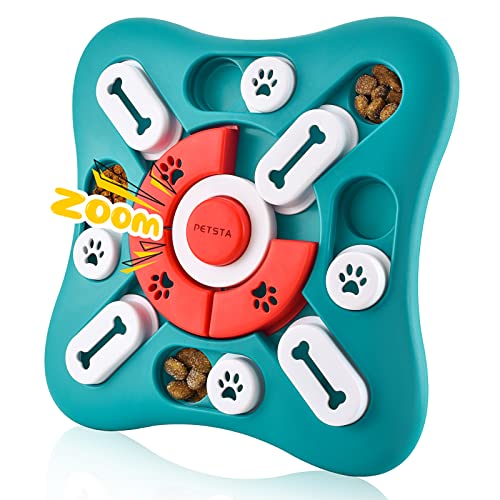
- Three play modes for varied enrichment
- 16-hole design supports slower feeding
- Nonslip and dishwasher-safe construction
Best For: Dogs and cats that enjoy varied treat puzzles and slower mealtimes
Best Intermediate Challenge

- Level 2 puzzle for beginners and smart pups
- Spinning layers reveal hidden treats
- Holds 1/2 cup and doubles as a slow feeder
Best For: Dogs ready for an interactive intermediate puzzle
Best for Interactive Training

- Sliding steps encourage sequential learning
- Built-in sound helps attract attention
- Washable food-safe polypropylene design
Best For: Small and medium dogs needing guided mental exercise
Best for Small Dogs

- Three layers combine licking and treat hunting
- Holds up to 1.5 cups of food or treats
- Compact, dishwasher-safe design for small dogs
Best For: Puppies and small dogs under 20 pounds
Best Small-Dog Starter

- Sliding treat puzzle for nose and paw play
- Slow-feeder design supports longer mealtimes
- Compact size for puppies and small dogs
Best For: Small dogs and puppies beginning puzzle play
Best Multi-Level Challenge

- Three levels with flip and sliding games
- Fourteen food holes help extend feeding
- Six anti-slip pads improve stability
Best For: Dogs needing varied mental challenges
Best Easy-Care Enrichment

- Foraging puzzle includes a built-in squeaker
- Slow-feeder design helps pace eating
- Dishwasher-safe surface and non-slip pads
Best For: Small and medium dogs needing easy-clean enrichment
Best for Advanced Small-Dog Enrichment

- Multi-step slider challenge
- Treat dispenser and slow feeder
- Built-in, dishwasher-safe pieces
Best For: Small dogs and puppies ready for more challenging enrichment
Best for All-Breed Treat Dispensing

- Suitable for nearly all breeds
- Gradual treat dispensing
- Lightweight and easy to rinse
Best For: Portable enrichment for dogs of varied sizes
Best for Flexible Treat Training
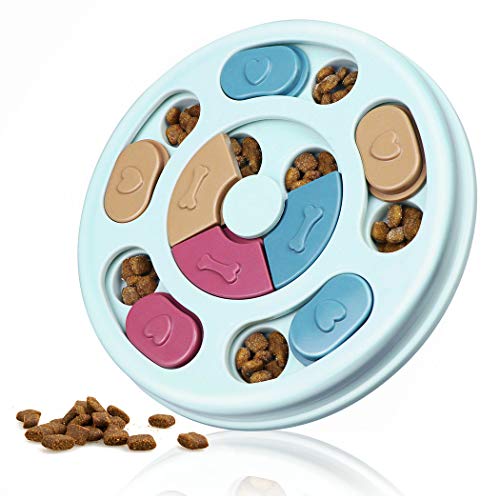
- Nose-and-paw slider gameplay
- Slow feeder and treat dispenser
- Non-detachable, water-resistant design
Best For: Young pets needing interactive training and slower feeding
Best All-Around Enrichment – PETSTA UFO Puzzle Toy
If you want dog puzzle toys under 30 that combine treat dispensing, slow feeding, and multiple challenge styles, the PETSTA UFO Puzzle Toy is a versatile pick. Its spin-and-slide and seek-and-hide activities give dogs several ways to work for food.
Best For: Dogs and cats that enjoy varied treat puzzles and slower mealtimes.
Pros:
- Offers three ways to play, including spin-and-slide and seek-and-hide activities.
- Its 16-hole dispenser can extend feeding time beyond 20 minutes.
- Non-removable play parts, nonslip pads, and dishwasher-safe cleaning add convenience.
Cons:
- Not designed for aggressive chewers.
- The supplied details list differing dimensions, so verify the product size before buying.
This is a strong choice for households seeking one compact enrichment toy with adjustable-style activities and slow-feeding benefits. Supervise play, particularly with determined chewers.
Best Intermediate Challenge – Nina Ottosson Dog Tornado
Among dog puzzle toys under 30, the Nina Ottosson Dog Tornado is a practical intermediate option for beginners or clever pups. Dogs spin the layers and move the bone-shaped pieces to uncover hidden treats.
Best For: Dogs ready for a Level 2 puzzle that can also make meals more engaging.
Pros:
- Level 2 design provides an approachable challenge for beginners and smart dogs.
- Combines spinning layers with removable bone pieces for interactive play.
- Holds up to 1/2 cup of kibble or treats and can function as a slow feeder.
Cons:
- Removable pieces may require closer supervision during play.
- It is intended for indoor use and is not water resistant.
The Dog Tornado suits owners who want a recognizable, adjustable-feeling puzzle format without jumping straight to an advanced challenge. Its treat capacity also makes it useful for enrichment at mealtime.
Best for Interactive Training – FOXMM Treat Puzzle
The FOXMM Treat Puzzle is one of the more training-focused dog puzzle toys under 30, using sequential sliding steps to make dogs work for their food. A built-in squeaker can help attract attention during interactive sessions.
Best For: Small and medium dogs that benefit from guided mental exercise and treat-based training.
Pros:
- Sliding actions encourage problem-solving and sequential learning.
- Built-in sound feature can help maintain a pet’s attention.
- Food-safe polypropylene construction is washable and dishwasher safe.
- Can help slow eating and provide boredom-focused enrichment.
Cons:
- It is not designed to be used as a chew toy.
- Pets should be supervised, and the toy should be replaced if damaged.
This puzzle is a good fit when you want enrichment that feels like a short training game rather than a passive feeder. Its compact UFO shape and portable design work well for indoor use.
Best for Small Dogs – Nina Ottosson Lickin’ Layers
For puppies and small breeds, the Nina Ottosson Lickin’ Layers is a useful choice among dog puzzle toys under 30. Its three rotating tiers combine licking, treat hunting, and slow feeding in a compact design.
Best For: Puppies and small dogs under 20 pounds that need slower meals and calming enrichment.
Pros:
- Three rotating layers provide licking and treat-hiding activities.
- Holds up to 1.5 cups of food or treats, including kibble, wet food, and peanut butter.
- Food-safe plastic is free of BPA, PVC, and phthalates and is top-rack dishwasher safe.
- Compact, lightweight design works at home, during travel, or in a crate.
Cons:
- It is specifically sized for puppies and small breeds, so larger dogs may not be a good match.
- The supplied dimensions indicate a compact 7-inch format that may limit use for bigger mouths.
This is the most targeted option here for smaller dogs, especially fast eaters or puppies learning calm mealtime habits. Its layered licking format adds enrichment without requiring a large floor footprint.
Best Small-Dog Starter – DR CATCH Sliding Treat Puzzle
For shoppers comparing dog puzzle toys under 30, the DR CATCH puzzle is a compact option for puppies, cats, and small dogs. Pets slide the pieces with their nose or paws to uncover food, adding mental stimulation while encouraging slower eating.
Best For: Small dogs and puppies that need a lightweight starter puzzle and slow-feeding activity.
Pros:
- Sliding design supports treat-finding, scent work, and IQ training.
- Slow-feeder format can extend feeding time and support digestion.
- Compact 9.44-by-9.44-inch size is suitable for small pets and is portable.
Cons:
- Recommended primarily for small breeds, puppies, and cats.
- Not water resistant.
- Requires supervision and replacement if damaged.
This is a practical pick for introducing a small pet to interactive feeding. Its simple sliding format may suit beginners, while owners should monitor play because the toy is not indestructible.
Best Multi-Level Challenge – Barkwhiz 3-Level Dog Puzzle
Among dog puzzle toys under 30, the Barkwhiz stands out for dogs that need more than a single easy task. It combines flip games and a linear sliding track across three levels, with 14 food-storage holes to make treat retrieval more involved.
Best For: Small, medium, and large dogs that benefit from adjustable challenges and longer feeding sessions.
Pros:
- Three levels and four play methods provide varied difficulty.
- Fourteen treat holes can help slow eating and prolong feeding time.
- Six silicone anti-slip pads help keep the puzzle stable.
- Food-safe material is easy to clean with warm water and soap.
Cons:
- Plastic toy is not water resistant.
- Its more involved design may require owner guidance at first.
- Supervision is recommended to prevent destructive chewing.
The Barkwhiz is a strong choice when a basic treat slider would be too easy. Its multiple game formats offer room to increase difficulty, but supervised use remains important.
Best Easy-Care Enrichment – Blue Squeaker Treat Puzzle
For dog puzzle toys under 30 that combine enrichment with easier cleanup, this blue interactive puzzle offers hidden-treat foraging, a built-in squeaker, and slow-feeder functionality. Its size is intended for small and medium dogs, puppies, and cats.
Best For: Small and medium dogs that need a washable boredom-busting activity and slower treat or kibble access.
Pros:
- Foraging design engages a pet’s nose and paws while hiding treats.
- Slow-feeder layout may help reduce gulping and extend eating time.
- Food-grade BPA-free PP material and non-removable parts support safer play.
- Water- or dishwasher-cleanable surface makes maintenance simple.
Cons:
- Recommended for small and medium dogs rather than specifically large breeds.
- Not water resistant as a product category detail.
- Although designed for stability, pets should still be monitored during use.
This puzzle is a convenient everyday option for owners who want treat-based enrichment without difficult cleanup. The squeaker may add interest, while the non-slip pads help during feeding and play.
Best for Advanced Small-Dog Enrichment – Multi-Step IQ Puzzle
Among dog puzzle toys under 30, this round interactive feeder stands out for its multi-step design. Dogs must move the red sliders and center sections in sequence to uncover treats, making it a more demanding choice for small dogs, puppies, and other curious pets.
Best For: Small dogs and puppies that need a challenging mental workout, treat training, or slower mealtimes.
Pros:
- Uses sequential slide-and-seek actions for more advanced enrichment.
- Works as a treat dispenser and slow feeder.
- Built-in pieces are designed not to detach easily.
- Dishwasher-safe and washable with water.
Cons:
- The 10-by-10-inch format is primarily suited to small dogs and puppies.
- Its higher challenge level may be frustrating for beginners without guidance.
This is a strong pick when simpler sliding toys no longer hold your dog’s attention. The multiple steps provide meaningful problem-solving practice, while the treat-based format can also support more engaging feeding and training sessions.
Best for All-Breed Treat Dispensing – Portable Round Snoop Toy
This round dispenser is a versatile option among dog puzzle toys under 30, using gradual treat release to turn snack time into an enrichment activity. Its compact, lightweight design works for indoor or outdoor play and is intended for dogs of all life stages.
Best For: Households with small, medium, or large dogs that want a portable boredom-buster and treat dispenser.
Pros:
- Designed for nearly all breeds and sizes.
- Dispenses treats gradually to extend playtime.
- Lightweight and portable for indoor or outdoor use.
- Pet-safe construction is easy to rinse.
Cons:
- It is not water resistant.
- The round dispenser may offer less step-by-step challenge than a slider-based puzzle.
Choose this toy if convenience and broad size compatibility matter most. It provides a straightforward way to add mental stimulation to snack time without requiring a larger puzzle board or complicated setup.
Best for Flexible Treat Training – Sliding Puzzle Feeder
This blue sliding puzzle is a practical choice among dog puzzle toys under 30 for owners who want both enrichment and food-based training. Dogs use their noses or paws to move the sliders, uncover rewards, and practice problem-solving while eating more slowly.
Best For: Young pets and small dogs, with use also described for medium and large dogs, needing treat training, boredom relief, or slower feeding.
Pros:
- Encourages pets to follow sequential steps to find food.
- Functions as both a treat dispenser and slow feeder.
- Non-detachable sliders help reduce swallowing concerns.
- Lightweight, portable, and water-resistant.
Cons:
- The listed size classification identifies it primarily for small dogs.
- Dogs may need training to learn the sliding actions.
This puzzle offers a useful middle ground between interactive play and practical feeding support. Its colorful slider layout gives dogs a hands-on challenge, while the slow-feeder function makes it especially useful during treat sessions or meals.
How We Picked the Best Dog Puzzle Toys Under 30
We focused on affordable interactive toys designed to make dogs work for treats or part of a meal. The selection covers several puzzle formats, including rotating compartments, layered platforms, dispensers, topple-style toys, and beginner-friendly feeders. We also considered adjustable difficulty, cleaning practicality, suitability for different breeds, and whether a toy can provide useful engagement without requiring constant hands-on play.
Because durability and safety depend heavily on the individual dog, these toys should be used with supervision, especially during first use. Remove any damaged toy and follow the manufacturer’s size, cleaning, and treat recommendations.
Quick Comparison
- Best for varied challenges: Multi-level or adjustable puzzles let you increase difficulty as your dog learns.
- Best for beginners: Simple treat dispensers and open-compartment feeders are usually easier to understand.
- Best for slower eating: Puzzle feeders can replace or supplement a regular meal with measured kibble.
- Best for licking enrichment: Layered designs can offer a longer, more involved food-searching session.
- Best for portability: Compact rolling or topple-style toys are easier to store and take on trips.
Key Buying Factors for Dog Puzzle Toys Under 30
Difficulty and Learning Curve
Choose a puzzle your dog can solve with some effort but not frustration. Beginners often do best with visible treats and one-step actions. Experienced dogs may need rotating sections, multiple levels, or less obvious compartments to stay interested. If possible, select a design that allows difficulty to increase gradually.
Size, Materials, and Chewing Style
Check the toy’s dimensions against your dog’s mouth and paws. Small dogs may struggle with oversized mechanisms, while large or determined chewers can damage lightweight plastic. Most puzzle toys are enrichment tools rather than chew toys, so avoid leaving them unattended with dogs that shred or aggressively bite their toys.
Food Compatibility and Cleanup
Look for openings that fit your dog’s usual kibble or treats without becoming impossible to empty. Removable parts and smooth surfaces make cleanup easier, particularly when using moist food. Measure portions carefully so puzzle play does not add excessive calories to your dog’s daily intake.
Stability and Noise
A non-slip base can keep a stationary puzzle from sliding across hard floors. Rolling or topple toys may be more engaging but can create noise and require open space. Think about where your dog will use the toy and whether movement could disturb other pets or household members.
Who Should Buy Which Dog Puzzle Toys Under 30?
New puzzle users should start with a straightforward dispenser or feeder with clearly visible rewards. Fast eaters may benefit from a puzzle that turns kibble into a slower, more active meal. Experienced problem-solvers should consider multi-stage or rotating designs that offer more than one action. Dogs that enjoy licking may prefer a layered format, while high-energy dogs can benefit from a toy that rolls, topples, or requires movement.
Whichever option you choose, introduce it gradually and make the first session easy enough to build confidence. Treat these toys as supervised enrichment, rotate them with walks and training, and retire them when wear, cracks, or loose pieces appear.