Keeping a large, energetic dog active can be difficult when weather, work schedules, or limited outdoor space get in the way. A properly sized treadmill can provide controlled exercise at home while complementing regular walks and play.
This roundup compares 10 dog treadmills for large dogs, including non-motorized slatmills and curved designs with features such as brakes, timers, odometers, and adjustable slopes. Use the guide below to match the treadmill’s dimensions and controls to your dog’s size, fitness level, and training experience.
Best 10 Dog Treadmills for Large Dogs Picks for 2026
Best Manual Slatmill for 330-Pound Dogs
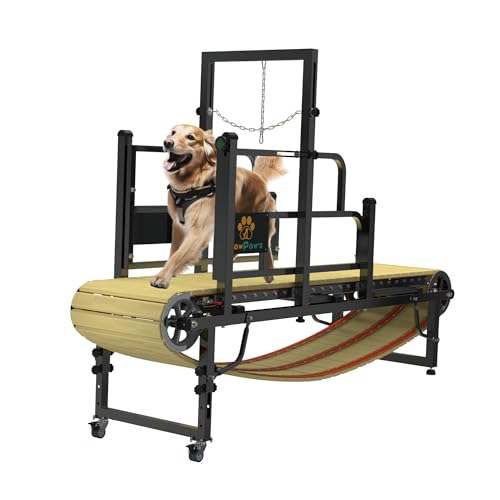
- Dog-powered, non-electric operation
- Supports up to 330 pounds
- Adjustable height for large breeds
Best For: Supervised, self-paced exercise for very large dogs
Best Adjustable Curved Slatmill
Curved Dog Treadmill with Silicone Slats

- Adjustable incline and resistance
- Disc brake with built-in speedometer
- Silicone-covered slats for traction
Best For: Customizable cardio and endurance training
Best for Multi-Dog Homes
Large Dog Treadmill with Foot Brake

- Five manual incline settings
- Adjustable guide system for different dogs
- Owner-operated foot brake
Best For: Households exercising multiple dogs
Best Guided Workout Setup
Non-Electric Slatmill for Large Dogs

- Dog-paced ABS slat belt
- Foot brake and adjustable incline
- Displays distance, speed, time, and calories
Best For: Structured indoor workouts for high-energy dogs
Roomy Natural-Stride Pick

- 18-inch usable width and 59.4-inch usable length
- Dog-powered deck with five-level manual incline
- Adjustable guide, timer, and hand brake
Best For: Large dogs and multi-dog homes needing controlled, adjustable training
Weather-Ready Resistance Pick

- Dog-powered operation with no preset motor speed
- Three-level braking and customizable incline
- Fiberglass belt with clear side panels
Best For: Multi-dog homes wanting adjustable resistance and indoor exercise
Maximum-Length Training Pick
Large-Dog Non-Motorized Treadmill

- 69.5-inch usable length and 18-inch usable width
- Dog-powered deck with two manual training angles
- Height-adjustable guide, LED display, and manual brake
Best For: Large dogs needing extra deck length and varied controlled training
Self-Paced Power
Large-Dog Manual Treadmill with Brake

- Dog-powered, non-electric belt
- Adjustable incline and safety brake
- Supports dogs up to 221 pounds
Best For: Medium and large dogs needing controlled indoor exercise
Heavy-Duty Conditioning
Large-Dog Treadmill with Safety Brake

- 305-pound maximum weight recommendation
- Manual, self-paced running design
- Adjustable slope and built-in brake
Best For: High-energy or heavier dogs needing indoor conditioning
Size-Selectable Training
Non-Electric Large-Dog Treadmill

- Choose 57-inch or 64-inch track
- Five-level incline with workout monitor
- Foot brake and side guards included
Best For: Active dogs needing a stride-appropriate track and conditioning features
Best Manual Slatmill for 330-Pound Dogs – PawPaw's Large Dog Treadmill
For shoppers comparing dog treadmills for large dogs, PawPaw’s manual slatmill stands out for its dog-powered design and high 330-pound weight recommendation. It can provide an indoor or outdoor exercise option when weather, hot pavement, late hours, or a busy schedule disrupt normal walks.
Best For: Large dogs needing supervised, self-paced exercise and households seeking a non-electric treadmill.
Pros:
- Dog-powered belt lets the dog control its own pace.
- Supports dogs up to 330 pounds, with adjustable height settings.
- Carbon steel frame, solid wood track, and aluminum rollers are designed for intensive use.
- Suitable for indoor or outdoor exercise in challenging weather.
Cons:
- Requires active owner supervision and manual stopping.
- The solid-wood track and 110-pound frame may be substantial to position.
- Fit should be checked carefully against the listed withers and chest measurements.
This is a practical choice for owners who prefer a self-paced workout rather than a motorized belt. Confirm your dog’s dimensions and plan for supervised sessions before buying.
Best Adjustable Curved Slatmill – Curved Dog Treadmill with Silicone Slats
This curved manual treadmill is a compelling option among dog treadmills for large dogs because it combines adjustable incline, resistance, and an overhead frame. Its silicone-covered slats and disc brake add useful control for supervised indoor cardio and endurance sessions.
Best For: Medium and large dogs whose owners want to fine-tune workout intensity and guide position.
Pros:
- Incline adjusts to a 4.6-degree setting, while the resistance damper helps vary intensity.
- Disc brake and built-in speedometer provide added stopping and workout control.
- Silicone-wrapped slats are textured for grip and paw comfort.
- Adjustable overhead gantry accommodates different strides.
Cons:
- It is a manual treadmill, so the dog must supply the movement.
- The listed 500-pound capacity does not replace checking the usable running space and fit.
- Assembly is still required, despite the step-by-step guidance.
Choose this model if adjustable resistance and a controllable stopping system matter more than motorized speed presets. The heavy-duty frame and quiet aluminum hubs also support indoor use where noise is a concern.
Best for Multi-Dog Homes – Large Dog Treadmill with Foot Brake
For multi-dog households researching dog treadmills for large dogs, this non-motorized model is designed to accommodate different dogs through adjustable incline and guide settings. Each dog can exercise at its own pace while the owner maintains control with a foot brake.
Best For: Families with multiple dogs that need individualized, supervised indoor exercise sessions.
Pros:
- Five manual incline settings range from 3.35 to 7 degrees.
- Adjustable support guidance can be reset for different dog sizes.
- Owner-operated foot brake provides a convenient way to slow or stop the belt.
- 18-inch usable width, acrylic side panels, and wheel covers support a defined exercise area.
Cons:
- Dogs must power the belt, so it is not suitable for motor-assisted pacing.
- Its 300-pound weight recommendation is lower than some competing models.
- Each session requires supervision and setup adjustments when switching dogs.
This treadmill makes the most sense when one household needs flexible settings for dogs with different energy levels. Its low-entry design and foot brake are useful practical touches, but owners should still introduce each dog gradually.
Best Guided Workout Setup – Non-Electric Slatmill for Large Dogs
This dog-powered slatmill is built for owners comparing dog treadmills for large dogs and wanting hands-on session control. Its adjustable incline, rotating U-bar, foot brake, distance counter, and 18-inch deck provide a structured setup for supervised indoor exercise.
Best For: High-energy large dogs needing repeatable, owner-guided workouts when outdoor activity is limited.
Pros:
- ABS slat belt follows the dog’s own pace without a motor or preset speed.
- Standing foot brake lets the owner add resistance or slow the belt.
- Adjustable incline and rotating U-bar support different training setups.
- Distance, speed, time, and calorie metrics help reference each session.
Cons:
- It requires gradual introduction and supervision for every session.
- The 122-pound unit has a large 74.8-inch length.
- Manual operation does not provide motor-driven speed control.
This model is a strong fit for owners who want to manage the workout environment while allowing the dog to set the pace. The included guards, harness, and installation materials make it suited to guided, repeatable use, provided there is adequate floor space.
Roomy Natural-Stride Pick – Large-Dog Adjustable Slatmill
For shoppers comparing dog treadmills for large dogs, this non-motorized slatmill emphasizes usable space and owner control. Its 18-inch width, 59.4-inch usable length, adjustable harness guide, manual incline, timer, and hand brake support walking and controlled trotting rather than full-speed sprinting.
Best For: Large dogs and multi-dog homes that need an adjustable, dog-powered treadmill for controlled indoor training.
Pros:
- 18-inch usable width and 59.4-inch usable length provide room for a natural stride.
- Dog-powered deck avoids a preset motor pace.
- Five-level manual incline, adjustable guide, timer, and low-position hand brake add session control.
- Connected ABS slats and a fixed steel frame are designed for repeated use.
Cons:
- Designed for walking and controlled trotting, not full-speed sprinting.
- The timer displays elapsed time only.
- At 104 pounds and 67 inches deep, it requires a dedicated setup area.
This is a practical choice when stride room and adjustable positioning matter more than motorized speed settings. Measure your dog’s body length and shoulder height first, using weight as a secondary reference.
Weather-Ready Resistance Pick – HotFeed Manual Dog Slat Mill
This HotFeed model is a manual option for shoppers seeking dog treadmills for large dogs without a motorized pace. Its fiberglass running belt, three-level braking system, customizable incline, clear side panels, and steel frame are designed for indoor exercise in changing weather.
Best For: Multi-dog households and owners who want dog-led exercise with adjustable resistance and braking.
Pros:
- Non-motorized operation lets the dog set the pace and pause when needed.
- Fiberglass belt is described as splinter-free and more durable than traditional wooden belts.
- Three-level adjustable braking system supports resistance changes and stopping.
- Clear acrylic side panels, customizable incline, and a carbon steel frame add practical versatility.
Cons:
- The product listing describes it as intended for medium dogs despite a 320-pound maximum recommendation, so careful fit checking is important.
- At 120 pounds and 70 inches deep, it is bulky to position.
- It uses manual or visual estimation rather than a clearly specified workout-metric display.
Its strongest selling points are dog-controlled pacing, adjustable resistance, and weather-independent use. Before buying, compare your dog’s body measurements with the 66-by-20-inch running area and the manufacturer’s fit guidance.
Maximum-Length Training Pick – Large-Dog Non-Motorized Treadmill
Among dog treadmills for large dogs, this non-motorized model stands out for its 69.5-inch usable length and 18-inch usable width. The dog-powered ABS slat deck, height-adjustable guide, manual angles, timer, LED display, and manual brake are aimed at controlled exercise with an adult actively supervising.
Best For: Large or medium dogs needing extra deck length, varied incline training, and owner-assisted pacing control.
Pros:
- 69.5-inch usable length and 18-inch usable width provide movement margin for larger dogs.
- Self-propelled deck lets the dog set the pace without a motor.
- Height-adjustable guide, 3.35- or 7-degree manual angles, and a manual brake support customization.
- LED display and timer provide session information, while the clear rear approach aids positioning.
Cons:
- It is intended for walking and controlled trotting rather than full-speed sprinting.
- The supplied notes conflict on display metrics: the features list mentions speed and other readings, while the product description says the timer does not track speed, distance, or calories.
- At 78 inches deep and 112 pounds, it needs substantial floor space.
This model makes the most sense for owners prioritizing a longer usable deck and multiple training angles. Confirm the actual display functions and measure body length and shoulder height before purchase.
Self-Paced Power – Large-Dog Manual Treadmill with Brake
If you’re comparing dog treadmills for large dogs, this manual model is designed for pets that need a self-paced indoor workout. Its dog-powered belt, adjustable incline, brake system, and 221-pound weight recommendation make it a practical option for supervised exercise when outdoor conditions or schedules get in the way.
Best For: Medium and large dogs needing controlled, self-paced indoor exercise.
Pros:
- Non-electric belt lets the dog control the running pace.
- Adjustable incline supports different fitness levels and stamina.
- Brake system helps owners stop the treadmill safely.
- Eco-friendly pedal material is described as durable, paw-friendly, and easy to clean.
Cons:
- Manual operation requires the dog to provide all the power.
- The 221-pound weight recommendation may not suit the heaviest large breeds.
- Its substantial 69.2-inch depth requires dedicated floor space.
Choose this model if you value a straightforward, dog-controlled workout with incline adjustment and a built-in stopping aid. Measure your available space and your dog before ordering, then introduce the treadmill gradually under supervision.
Heavy-Duty Conditioning – Large-Dog Treadmill with Safety Brake
This option stands out among dog treadmills for large dogs with its manual running design, adjustable slope, and 305-pound weight recommendation. It is built around self-paced exercise, making it useful for high-energy or overweight dogs that need indoor activity without a motor-set speed.
Best For: High-energy and heavier medium-to-large dogs needing adjustable indoor conditioning.
Pros:
- Non-motorized belt follows the dog’s own pace.
- Adjustable slope can be matched to the dog’s size, weight, and endurance.
- Built-in safety brake allows the owner to lock the treadmill when needed.
- High-carbon-steel construction and a 305-pound weight recommendation suit demanding use.
Cons:
- At 128 pounds, the treadmill is heavy to move.
- Manual operation depends entirely on the dog’s movement.
- The listing provides limited detail about the exact workout-monitor functions.
This is a compelling pick when weight capacity and heavy-duty construction matter more than portability. Its slope adjustment can help vary workouts, but users should begin with short sessions and supervise their dog throughout.
Size-Selectable Training – Non-Electric Large-Dog Treadmill
For shoppers comparing dog treadmills for large dogs, this model offers two track choices to better match body length and stride. Its non-electric slat belt, foot-operated brake, five-level incline, side guards, and workout monitor provide useful control for supervised indoor walking, jogging, or running.
Best For: Active medium and large dogs whose owners want track-size flexibility and workout data.
Pros:
- 57-inch and 64-inch track options help accommodate different strides.
- Dog-powered belt supports natural, self-paced movement.
- Foot brake, side guards, and covered wheel sections add practical safety features.
- Five-level incline and monitor support gradual conditioning.
Cons:
- Track selection requires careful measurement before ordering.
- It is a large, heavy unit at approximately 53.1 kilograms.
- Dogs must be supervised and used with a properly fitted harness.
This is the most configurable choice of the three, particularly for owners who want to match the track to their dog’s stride rather than rely on weight alone. The partially pre-assembled steel frame may simplify setup, but plan for adequate clearance on a level floor.
How We Picked the Best Dog Treadmills for Large Dogs
We focused on the features that matter most for safely exercising bigger dogs: usable running width, overall track length, construction, braking, speed or activity controls, and ease of supervision. The selection includes primarily non-electric slatmills and curved treadmills, which let dogs control their pace and avoid reliance on a powered belt. We also considered practical additions such as timers, odometers, speedometers, adjustable slopes, and side panels that can help with training and focus.
Quick Comparison
| Feature | Why It Matters |
|---|---|
| 18-inch usable width | Provides more room for many medium and large breeds to move naturally. |
| Non-electric operation | Lets the dog set the pace and avoids motor noise or power requirements. |
| Brake or foot brake | Helps the handler stop the treadmill quickly during training or an interruption. |
| Curved track or adjustable slope | Can support natural pacing and more challenging workouts. |
| Timer, odometer, or speedometer | Makes it easier to monitor duration, distance, and progress. |
Key Buying Factors for Dog Treadmills for Large Dogs
Measure the Usable Track
Do not choose based only on the treadmill’s exterior dimensions. Check the usable walking surface and compare it with your dog’s body length and stride. An 18-inch-wide track may suit many large dogs, but taller or particularly broad breeds may need more room. Your dog should be able to walk without brushing the sides or shortening its stride.
Prioritize Control and Stopping Power
A brake, especially a reachable foot brake, gives you direct control when a dog loses balance, becomes distracted, or needs a break. Side panels can also help some dogs stay centered, but they should not replace supervision or gradual acclimation.
Match the Design to the Dog
Curved, non-motorized treadmills are often useful for dogs that can regulate their own pace and need structured conditioning. A slatmill with a lower learning curve may be better for beginners. Dogs with joint disease, heart conditions, obesity, or prior injuries should be cleared by a veterinarian before using any treadmill.
Consider Tracking and Maintenance
Timers and distance or speed readouts are helpful for building consistent sessions. Inspect slats, bearings, brakes, and side panels regularly, and keep the track clean and properly lubricated according to the manufacturer’s instructions.
Who Should Buy Which Dog Treadmills for Large Dogs?
- For broad, high-energy dogs: Look for a model with an 18-inch usable width or larger, sturdy construction, and a dependable brake.
- For dogs learning treadmill exercise: Choose a non-electric design with straightforward controls and introduce it slowly with rewards.
- For conditioning plans: A treadmill with an odometer, speedometer, timer, or adjustable slope can make progress easier to measure.
- For homes with limited space or no convenient outlet: A non-motorized slatmill avoids electrical requirements, though it may be heavy and require more floor space.
- For safety-conscious owners: Favor a model with a quick-stop brake, stable frame, and enough clearance for your dog’s natural gait.
Whichever of these Dog Treadmills for Large Dogs you choose, begin with short, calm sessions and stay beside your dog throughout use. A treadmill should supplement—not replace—outdoor walks, sniffing, play, and veterinary guidance.