Regular exercise supports your dog’s mobility, weight management, and overall well-being, but weather, schedules, and limited outdoor access can make daily activity difficult. Manual dog treadmills offer a controlled way to add movement at home without depending entirely on walks.
This roundup compares 10 options for small, medium, and large dogs, including non-electric slatmills and feature-rich treadmills with brakes, incline settings, displays, and remote controls. Use the guide below to match the right design to your dog’s size, temperament, and exercise needs.
Best 10 Manual Dog Treadmills Picks for 2026
Heavy-Duty Dog-Paced Pick
Large-Dog Non-Electric Slatmill

- Dog-powered ABS slat belt
- Foot brake and adjustable incline
- Supports dogs up to 300 pounds
Best For: Supervised indoor exercise for medium and large high-energy dogs
Feature-Rich Electric Option

- 0.5–7.5 mph motorized range
- Remote and LCD workout display
- Three incline levels and shock-absorbing belt
Best For: Small and medium dogs needing adjustable, programmed indoor exercise
Wide-Deck Training Pick

- 18-inch usable width and 59.4-inch length
- Dog-driven deck with manual brake
- Two manual incline angles and timer
Best For: Large dogs needing controlled walking or trotting with extra deck room
Compact Indoor Pick
Low-Noise Small/Medium Dog Treadmill
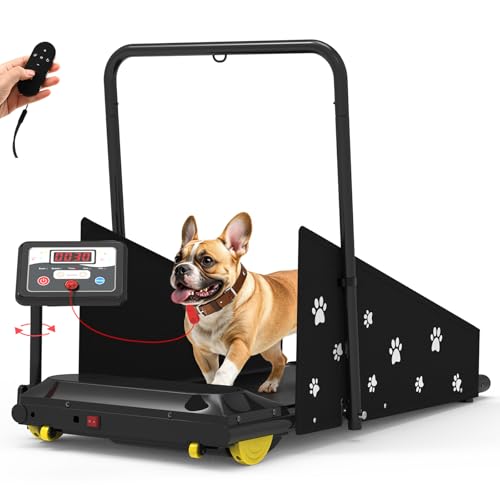
- 0.5–4.0 mph adjustable speed
- Remote, safety key, and rotatable display
- Wheels and removable parts aid storage
Best For: Small and medium dogs needing space-conscious indoor exercise
Best Multi-Dog Manual Treadmill
Large-Dog Slatmill with Foot Brake

- Dog-powered design lets each dog choose its pace
- Five incline settings and adjustable guide system
- 300-pound recommendation with owner-operated foot brake
Best For: Multi-dog homes and supervised large-dog exercise
Best Motorized Alternative for Small Dogs
Lifepro PawRunner for Small and Medium Dogs

- Remote-adjustable speed for indoor routines
- Quiet motor with safety key and emergency stop
- 38.6-by-14.2-inch running surface
Best For: Small and medium dogs needing guided indoor exercise
Best Manual Slatmill for Adjustable Resistance
HotFeed Dog Treadmill with Brake

- Dog-powered track supports natural pacing
- Three-level braking system adjusts resistance
- Fiberglass belt and steel frame for durable use
Best For: Active dogs needing supervised resistance-based exercise
Best Manual Pick
Heavy-Duty Self-Driving Treadmill

- Dog-powered belt follows your pet’s pace
- Adjustable incline and safety brake
- Supports dogs up to 221 pounds
Best For: Medium and large dogs needing substantial indoor exercise capacity
Best Compact Option
Quiet Indoor Treadmill for Small Dogs

- Quiet motor runs below 55 dB
- Foldable, wheeled, and space-saving
- Safety panels and remote controls included
Best For: Small dogs in apartments or homes with limited storage space
Best for High-Energy Dogs

- Non-motorized belt follows the dog’s pace
- Adjustable slope and built-in safety brake
- Paw-friendly, non-slip running surface
Best For: High-energy or overweight medium and large dogs
Heavy-Duty Dog-Paced Pick – Large-Dog Non-Electric Slatmill
This heavy-duty option stands out among manual dog treadmills for medium and large, high-energy dogs. Its ABS slat belt moves from your dog’s effort, while the owner-controlled foot brake, adjustable incline, and rotating U-bar support guided indoor exercise.
Best For: Medium and large dogs needing supervised, dog-paced movement when weather, schedules, or outdoor conditions limit walks.
Pros:
- Dog-driven belt avoids preset motor speeds.
- Foot brake lets the owner add resistance and help slow the belt.
- Steel and ABS construction supports up to 300 pounds.
- Includes a distance counter and adjustable front incline.
Cons:
- At 113 pounds, it is not especially easy to relocate.
- It requires active supervision and gradual introduction.
- The 18-inch deck width may not suit every large dog’s stride.
Choose this model when durability, capacity, and owner-guided control matter more than compact storage. Its 57-inch deck and 12.2% maximum incline provide useful setup flexibility, but fit should be based on body size and stride.
Feature-Rich Electric Option – Small/Medium Dog Treadmill
Although it is motorized rather than manual, this GYMAX model is a useful comparison point for shoppers considering manual dog treadmills. It combines remote-controlled speed adjustment, three incline levels, workout monitoring, and a shock-absorbing belt for small and medium dogs.
Best For: Small and medium dogs whose owners want programmed, adjustable indoor exercise with remote control and workout metrics.
Pros:
- Offers speeds from 0.5 to 7.5 mph and three incline levels.
- LCD display tracks speed, time, distance, and calories.
- Remote works from up to 32.8 feet away.
- Five-layer shock-absorbing belt and low-noise operation support indoor use.
Cons:
- It is corded electric, so it does not provide a manual dog-paced workout.
- The 39-inch deck is intended for small and medium dogs.
- The listed warranty is 90 days.
This is better suited to owners who prefer consistent motorized pacing and detailed readouts. The removable side covers and handlebar also let it function as a walking pad, though supervised pet use remains important.
Wide-Deck Training Pick – Large-Dog Manual Slatmill
This non-motorized model is one of the more spacious manual dog treadmills for large dogs, with an 18-inch usable width and 59.4-inch usable length. The dog-driven deck, harness guide, manual brake, timer, and two deck angles support controlled walking or trotting under active adult supervision.
Best For: Large or medium dogs that need additional stride room and owner-assisted pace control rather than full-speed sprinting.
Pros:
- Wide, long usable deck allows more movement margin.
- Dog-powered design lets the dog set the pace naturally.
- Manual brake and harness guide provide session control.
- Includes 3.35° and 7° manual deck-angle options.
Cons:
- The timer does not track distance, speed, or calories.
- At 104 pounds, it requires a dedicated setup area.
- It is designed for controlled walking and trotting, not sprinting.
Consider this model if deck space is your priority. Its 67-inch overall length and 24-inch listed width offer a substantial footprint, so measure your available room and select based on body length and shoulder height before weight.
Compact Indoor Pick – Low-Noise Small/Medium Dog Treadmill
This compact CIIHI model is an electric alternative to manual dog treadmills, designed for small and medium dogs that need convenient indoor exercise. It offers remote speed control, a rotatable display, safety key, side panels, and wheels for easier positioning and storage.
Best For: Owners of small or medium dogs who want a relatively compact, low-noise treadmill that can also serve as a human walking machine.
Pros:
- Low-noise operation and a remote with mute function.
- Safety key is designed to stop the treadmill when disconnected.
- Wheels make repositioning easier, while removable parts support storage under furniture.
- Supports speeds from 0.5 to 4.0 mph and up to 265 pounds.
Cons:
- It is motorized rather than dog-powered.
- The 36.22-by-14.17-inch belt is relatively compact.
- Its 4.0 mph maximum is lower than some motorized alternatives.
This model makes sense where space and convenient controls are more important than a self-propelled belt. The 360-degree display, remote, and removable side panels add flexibility, but confirm that the belt dimensions suit your dog’s body and stride.
Best Multi-Dog Manual Treadmill – Large-Dog Slatmill with Foot Brake
This non-motorized option is a practical choice for households comparing manual dog treadmills for multiple dogs. Its dog-powered design allows each pet to set its own pace, while five incline settings and an adjustable guide system help tailor sessions to different sizes and energy levels.
Best For: Multi-dog homes needing a large, adjustable treadmill for supervised indoor exercise.
Pros:
- Dog-powered operation supports each dog’s natural pace without preset speed controls.
- Five manual incline settings range from 3.35° to 7° for varied workout intensity.
- Adjustable guide system, protective wheel covers, acrylic side panels, and an owner-operated foot brake add control during sessions.
- Heavy-duty alloy-steel frame and textured ABS slat surface are designed for repeated use.
Cons:
- At 67 inches long and 23 inches wide, it requires substantial floor space.
- Its manual design does not provide motorized speed control.
- The supplied maximum speed specification is listed as 1 kilometer per hour, so buyers should confirm the intended operating details.
With a 300-pound maximum weight recommendation and a setup designed around multiple dogs, this is one of the more adaptable manual dog treadmills in the group. The foot brake and adjustable incline are useful additions for owners who want hands-on control over indoor workouts.
Best Motorized Alternative for Small Dogs – Lifepro PawRunner for Small and Medium Dogs
Although it is motorized rather than a manual dog treadmill, the Lifepro PawRunner is worth considering if you want remote-controlled indoor exercise for a small or medium dog. It offers a remote-adjustable speed range, a quiet motor, and safety features intended for routine home workouts.
Best For: Small and medium dogs whose owners want remote-controlled, weather-independent exercise.
Pros:
- Remote control allows owners to adjust exercise speed from a distance.
- Ultra-quiet motor is designed for in-home use.
- Safety key and emergency stop button provide additional control.
- Includes an LCD display, 12 programs, and a 38.6-by-14.2-inch running surface.
Cons:
- It is not a manual or dog-powered treadmill.
- It is intended for small and medium dogs rather than large dogs.
- Owners should measure their pet and review the fit guidance before purchase.
The PawRunner stands apart from the manual dog treadmills here because its motor and remote handle the pacing. For buyers prioritizing convenience, quiet operation, and built-in safety controls over dog-led movement, it may be the more suitable format.
Best Manual Slatmill for Adjustable Resistance – HotFeed Dog Treadmill with Brake
The HotFeed is a strong contender among manual dog treadmills for owners who want adjustable resistance and a durable slatmill format. Its non-motorized track lets dogs choose their pace, while the three-level braking system provides hands-on control for starting, resistance adjustment, and stopping.
Best For: Active medium and larger dogs needing dog-led exercise with adjustable resistance.
Pros:
- Non-motorized operation allows dogs to walk, jog, sprint, pause, and rest at their own pace.
- Three-level adjustable braking system supports resistance changes and quick stopping.
- Fiberglass running belt is described as splinter-free and more durable than traditional wood belts.
- Clear acrylic side panels, a steel frame, and customizable incline support supervised workouts.
Cons:
- The 70-by-25-by-60-inch dimensions and 120-pound product weight make it a substantial piece of equipment.
- It has no motorized speed controls or electronic workout metrics.
- Buyers should measure their dog carefully because the product is designed around particular medium-breed examples.
With a 320-pound maximum weight recommendation and a two-year manufacturer warranty, the HotFeed emphasizes robust construction and user-controlled resistance. It is a practical pick for owners who prefer natural, dog-powered movement but still want braking and incline adjustments.
Best Manual Pick – Heavy-Duty Self-Driving Treadmill
This manual dog treadmill is designed for medium and large dogs that need controlled indoor exercise without a motor setting the pace. Its self-driving belt follows your dog’s movement, while the adjustable incline, brake system, and paw-friendly running surface add flexibility for daily workouts.
Best For: Medium and large dogs up to the stated 221-pound weight recommendation, especially pets needing indoor exercise, weight management, or a way to stay active during poor weather.
Pros:
- Non-electric belt lets the dog control the running speed naturally.
- Adjustable incline supports different fitness levels and stamina.
- Built-in brake helps owners stop the treadmill safely.
- Durable, easy-clean pedal material is designed to be comfortable for dog paws.
Cons:
- Large 69.2-inch length and 221-pound capacity may require substantial floor space.
- Manual design depends on the dog’s willingness and ability to keep the belt moving.
With its high weight recommendation, adjustable incline, and owner-controlled brake, this is a practical manual dog treadmill for bigger, energetic dogs. Check the available space and confirm that your dog can use a self-powered belt comfortably before buying.
Best Compact Option – Quiet Indoor Treadmill for Small Dogs
Unlike the other manual dog treadmills in this roundup, this Petbobi model uses a quiet electric motor and is built for compact indoor exercise. It combines a low-noise motor, remote controls, safety features, and a foldable design for owners who want guided workouts in a smaller home.
Best For: Small dogs and selected medium dogs that fit the 36.2-by-14.2-inch belt, particularly apartment or condo households that value quiet operation and easy storage.
Pros:
- Quiet motor operates below 55 dB, with a remote mute mode for indoor use.
- Remote and LCD display provide control over speed, time, distance, and calories.
- Enclosed side panels, a magnetic safety key, and a leash ring support safer training.
- Wheels, detachable panels, and foldable storage help conserve floor space.
Cons:
- It is corded electric rather than manually powered.
- The belt is primarily suited to small dogs running at full speed; fit should be checked carefully.
- Owners must introduce dogs gradually, starting with familiarization and low-speed sessions.
This is the most space-conscious choice for indoor dog exercise, but its belt dimensions make sizing especially important. Verify your dog’s body length and weight, then use the gradual adaptation process recommended by the manufacturer.
Best for High-Energy Dogs – Large-Breed Manual Treadmill
This large-breed manual dog treadmill uses a non-motorized running belt that lets the dog set the pace. Its adjustable slope and built-in safety brake make it suited to owners who want to vary workout difficulty while maintaining a way to stop the belt securely.
Best For: High-energy or overweight medium and large dogs, including pets that need an indoor alternative to walks in extreme weather.
Pros:
- Self-powered design avoids forcing dogs to match a preset motor speed.
- Adjustable slope can be adapted to the dog’s size, weight, and endurance.
- Safety brake lets the owner lock the treadmill when the workout should stop.
- Non-slip, paw-friendly pedal material is designed for durability and easy cleaning.
Cons:
- At 128 pounds, the treadmill is heavy and may be difficult to reposition.
- Its approximately 68.9-inch length requires a dedicated exercise area.
- The manual belt requires the dog to provide the energy for movement.
This model stands out for large, energetic dogs that benefit from adjustable resistance through slope changes. Because it is substantial and non-motorized, plan for permanent placement and make sure your dog is comfortable driving the belt independently.
How We Picked the Best Manual Dog Treadmills
We focused on the features that matter most for safe, repeatable canine exercise: usable running surface, weight and size compatibility, braking or speed-control options, noise, stability, adjustability, and ease of storage. We also separated truly non-motorized slatmills from powered treadmills, since they provide different exercise experiences and require different levels of owner involvement.
Because dogs vary widely in stride, confidence, and fitness, no single treadmill is ideal for every household. Product specifications should be checked against your dog’s measurements and your veterinarian’s advice, particularly for senior, overweight, injured, or medically vulnerable dogs.
Quick Comparison
- Best for owner-powered workouts: Non-electric slatmills let dogs set the pace and can provide a demanding workout for energetic dogs.
- Best for convenience: Powered models with remote controls, displays, and preset speed options simplify indoor exercise sessions.
- Best for large breeds: Look for an 18-inch usable width, a long deck, strong frame, and a dependable brake.
- Best for smaller spaces: Compact small- and medium-dog models with wheels are easier to move and store.
Key Buying Factors for Manual Dog Treadmills
Size and Running Surface
Measure your dog from nose to tail and watch the walking stride before choosing a deck. The belt or slat surface should allow natural movement without forcing your dog to shorten its stride. Large dogs generally need a longer, wider track; an 18-inch usable width can provide welcome room for bigger breeds.
Manual Versus Motorized Operation
A non-motorized slatmill moves as the dog walks, giving the dog direct control over pace but requiring more training and supervision. A motorized treadmill offers consistent speed and may be easier for cautious dogs, but it needs appropriate settings and close monitoring. Confirm the operating style rather than relying only on broad product titles.
Safety and Control
Prioritize a stable frame, side panels or rails, emergency stopping features, and a brake where applicable. Adjustable incline can increase difficulty, but beginners should start flat and slow. Never leave a dog unattended on a treadmill, and stop immediately if the dog shows fear, limping, fatigue, or unusual breathing.
Noise, Storage, and Maintenance
Quiet operation can help nervous dogs accept training. Wheels, a manageable footprint, and folding or upright storage are useful in smaller homes. Check whether the track needs lubrication, cleaning, tension adjustments, or periodic hardware checks before buying.
Who Should Buy Which Manual Dog Treadmills?
Choose a non-electric slatmill if your dog is energetic, confident, and needs a self-paced workout with no motor. Choose a powered small- or medium-dog treadmill if you want remote control, speed monitoring, and a more structured routine. Choose a wide large-dog model if your dog has a long stride, high energy, or weight-management goals. Features such as brakes, odometers, adjustable slopes, and shock-absorbing surfaces can be worthwhile when they directly support your training plan.
Introduce any treadmill gradually with rewards and short sessions. Let your dog inspect the equipment while it is off, then increase duration and speed only after relaxed, consistent walking. For rehabilitation or significant weight loss, coordinate the routine with a veterinarian or canine rehabilitation professional.