Outdoor cats need more than a box with a roof—they need shelter that helps them stay dry, warm, and safer in changing weather. That is where outdoor cat houses with escape doors stand out.
Below, we focus on practical picks for feral cats, porch sleepers, and backyard colonies, with an eye toward insulation, durability, elevation, and easy entry and exit.
Best 10 Outdoor Cat Houses with Escape Doors Picks for 2026
Ecoflex Long-Life Shelter
New Age Pet Albany Outdoor Cat House

- ECOFLEX resists rot, mold, insects, and moisture.
- Dual escape doors help cats feel safer inside.
- Tool-free assembly and easy wipe-clean care.
Best For: Feral cats and colony caregivers needing a durable, low-maintenance shelter
Weatherproof Wood Shelter
Rockever Large Outdoor Cat House

- Main door plus emergency escape door for safety.
- Asphalt roof and flaps help block weather.
- Open roof and removable floor make cleaning easier.
Best For: Buyers wanting a roomy wooden shelter with extra access and weather protection
Elevated Patio Refuge

- Dual escape doors improve safety for outdoor cats.
- Elevated base helps limit moisture and splash-up.
- Open roof and tray make cleaning quick and simple.
Best For: Small households needing a raised outdoor shelter for 1-2 cats
Plastic All-Weather Cave
Extra Large Insulated Feral Cat Shelter

- Main door and back escape door boost safety.
- Thick plastic build resists weather and insulates.
- Removable roof and smooth surface simplify cleaning.
Best For: Cat owners who want a durable, easy-clean plastic shelter for 1-2 cats
Compact plastic safety shelter
Weatherproof Cat House with Escape Door

- Thick HDPE build is waterproof
- Escape door supports quick emergency exit
- Includes a soft mat and fits 1-2 small cats
Best For: Small cats in porches, garages, or rescue areas
Raised wooden escape shelter
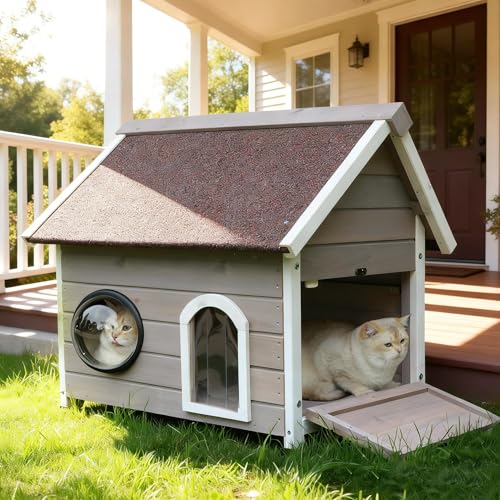
- Front and back doors for easy escape
- Raised floor and asphalt roof
- Removable floor and large side door
Best For: 1-2 adult cats needing a roomy, weather-resistant shelter
Insulated Wooden Shelter
Ketive Insulated Outdoor Cat House

- 6-side insulation helps retain body heat.
- Escape door adds a safer exit route.
- Raised base and slanted roof aid weather protection.
Best For: Cold-weather shelter for small feral cats
Insulated Roofed Hideaway
Outdoor Cat House with Escape Door

- Insulated walls and floor support winter warmth.
- Rear escape exit improves safety for feral cats.
- Hinged asphalt roof aids refilling and checks.
Best For: Winter shelter and feeding spot for community cats
Ecoflex Long-Life Shelter – New Age Pet Albany Outdoor Cat House
If you want outdoor cat houses with escape doors that are built for long-term use, the New Age Pet Albany is a practical pick. Its ECOFLEX composite is designed to resist rot, mold, insects, and moisture, while the elevated floor and double-wall panels help with comfort in changing weather. It also keeps setup and cleaning simple, which matters for caregivers managing outdoor cats regularly.
Best For: Feral cat caregivers and multi-cat colonies that need a durable, low-maintenance shelter.
Pros:
- Dual escape doors give cats a safer way out if they feel trapped.
- ECOFLEX construction is made to withstand moisture, odors, and harsh weather.
- Snaps together in minutes with no tools required.
- Elevated floor and insulation help with year-round comfort.
Cons:
- Heated pad is optional and sold separately.
- Interior space is more compact than larger multi-cat shelters.
Overall, this is a strong choice if you need a shelter that prioritizes durability, easy upkeep, and a second exit for outdoor cats that won’t feel secure in a single-entry house.
Weatherproof Wood Shelter – Rockever Large Outdoor Cat House
For buyers comparing outdoor cat houses with escape doors, the Rockever stands out with a larger wooden shelter layout and several weather-ready details. It includes a main door plus a dedicated emergency escape door, along with a sloped roof, asphalt shingles, and protective flaps to help keep the interior dry. The openable roof and removable floor also make routine cleaning much easier.
Best For: Cat owners who want a roomy wooden shelter with ventilation, an escape route, and easier deep cleaning.
Pros:
- Dual-exit design includes a main entrance and emergency escape door.
- Weatherproof features include asphalt shingles, an awning, and PVC/acrylic flaps.
- Openable hinged roof and removable bottom floor simplify cleaning.
- 3-hole side design supports ventilation and heating-pad cable use.
Cons:
- Requires assembly with a screwdriver.
- Wood construction may need more care than plastic or composite options.
This is a solid choice if you want a more feature-rich outdoor cat shelter and value ventilation, weather protection, and access for maintenance.
Elevated Patio Refuge – Outdoor Elevated Cat House
This outdoor cat house with escape doors is aimed at year-round use, especially for backyard, porch, and garage placement. It uses dual escape doors, a partially enclosed layout, and a foam-core structure to help cats feel secure while moderating temperature. The elevated base, slanted asphalt roof, and removable tray also make it easier to manage moisture and cleanup.
Best For: Backyard and patio cats that need a raised, easy-to-clean shelter for changing weather.
Pros:
- Dual escape doors add a key safety exit for outdoor cats.
- 6.1-inch elevated base helps reduce ground moisture and improve airflow.
- Openable roof and removable base tray simplify cleaning.
- Foam-core build is designed to help with seasonal comfort.
Cons:
- Best suited to 1-2 cats, so it is not a large colony shelter.
- Assembly is required, even though hardware and tools are included.
If you want a practical shelter for a small number of outdoor cats, this model offers the right mix of elevation, access, and cleanup-friendly design.
Plastic All-Weather Cave – Extra Large Insulated Feral Cat Shelter
If you need outdoor cat houses with escape doors in a low-maintenance material, this plastic shelter is worth a look. It uses a main entrance plus a back escape door, thick insulated plastic, and a drainage roof to help manage weather exposure. The removable elevated feet and wipe-clean surfaces also make it easier to place and maintain on decks, patios, or in the yard.
Best For: Owners wanting a sturdy plastic shelter for 1-2 cats with easy cleaning and simple placement.
Pros:
- Dual-door design gives cats a dedicated escape route.
- Heavy-duty plastic is sun-proof, rain-proof, wind-proof, and insulated.
- Detachable elevated feet help keep the house off wet ground.
- Removable roof and smooth surface make cleaning easy.
Cons:
- Interior size is best for 1 large cat or 2 average-sized adult cats.
- Plastic build may feel less traditional than wood shelters.
For buyers focused on durability and low upkeep, this shelter delivers a straightforward weather-resistant option with the added safety of a rear escape door.
Balcony-style wooden shelter – Outdoor Cat House with Balcony
If you want outdoor cat houses with escape doors that also give cats a place to perch, this wooden shelter is a strong fit. It combines weather protection, a raised base, and an upper balcony, so it works well for backyard cats that need both cover and a bit of open-air comfort.
Best For: Feral, stray, or backyard cats that need a weatherproof shelter with an elevated lounging area.
Pros:
- Waterproof asphalt roof and wooden walls help block rain, wind, and cold.
- Two entryways with PVC curtains support easy access and quicker escape.
- Thermal-lined interior adds warmth without shedding.
- Raised feet help keep the shelter drier and cleaner off wet ground.
Cons:
- Wood construction may be bulkier than lightweight plastic options.
- The balcony design may take up more space than a basic enclosed shelter.
This is a practical all-season pick if you want a sturdier wooden build and a cat house that offers both shelter and a viewing perch. The openable roof is also a helpful touch for cleaning and bedding changes.
Compact plastic safety shelter – Weatherproof Cat House with Escape Door
For shoppers comparing outdoor cat houses with escape doors, this plastic model is a straightforward weatherproof option for smaller spaces. It uses thick HDPE construction, includes a soft mat, and is sized to fit 1-2 cats up to 15 pounds.
Best For: Small cats or multi-cat setups that need a simple, easy-to-assemble shelter for porches, garages, or rescue spaces.
Pros:
- Escape door adds a quick exit for emergency safety.
- Thick HDPE material is waterproof and designed for durability.
- Includes a plush mat for a warmer resting area.
- Compact footprint makes it easier to place indoors or outdoors.
Cons:
- Smaller size may not suit larger cats comfortably.
- Plastic build may feel less substantial than wooden shelters.
This is a solid pick if you want a low-fuss shelter that prioritizes weather protection and fast setup. The escape door and included mat make it especially practical for everyday use in sheltered outdoor spots.
Raised wooden escape shelter – Elevated Outdoor Cat House
This is a larger option for buyers looking at outdoor cat houses with escape doors and more living space. With front and back access, a raised floor, and removable parts for cleaning, it’s aimed at cat owners who want a sturdy wooden shelter for year-round outdoor use.
Best For: 1-2 adult cats that need a roomy, weather-resistant shelter with easy cleaning access.
Pros:
- Front and back doors provide easy access and a quick escape route.
- Raised floor and asphalt roof help protect against moisture and rain.
- Removable floor and large side door make cleaning simpler.
- Acrylic dome window adds light while preserving privacy.
Cons:
- Wooden construction is likely less portable than plastic alternatives.
- Requires assembly, even though the parts are pre-drilled.
Overall, this shelter stands out for combining space, drainage-friendly elevation, and convenient maintenance features. If you want a more substantial cat house that still includes an escape door, it’s a well-rounded choice.
Insulated Wooden Shelter – Ketive Insulated Outdoor Cat House
If you want outdoor cat houses with escape doors that lean warm and protective, this wooden Ketive shelter is built for cold-weather use. Its 6-side insulation, raised base, PVC door curtains, and slanted roof are aimed at keeping stray and feral cats drier and better protected through winter.
Best For: Feral cats, small outdoor cats, and anyone needing a weather-resistant insulated shelter for cold conditions.
Pros:
- 6-side insulation and a 3-layer build help hold body heat in winter.
- Escape door adds a safer exit for cats that need to get away quickly.
- Raised feet and leak-proof roof help shed rain and snow.
- Openable roof makes feeding and cleaning easier.
Cons:
- Best suited to cats up to 22 pounds and a smaller interior footprint.
- Wood construction may need more care than plastic in rough conditions.
Overall, this is a practical pick if insulation and a safer dual-exit layout matter more than maximum space. It fits the needs of colder outdoor setups where simple access, shelter, and warmth are the priorities.
Heavy-Duty Plastic Shelter – Weatherproof Cat House with Escape Door
Among outdoor cat houses with escape doors, this HDPE model stands out for low-maintenance durability and all-season protection. The double-layer plastic build, rain curtain, elevated legs, and hidden side escape door are designed for yards, barns, porches, and other exposed spaces.
Best For: Cat caretakers who want a tough, easy-clean shelter for multi-cat outdoor setups.
Pros:
- Thick double-layer HDPE is windproof, rainproof, and snowproof.
- Side escape door gives feral cats a safer way out.
- Tool-free assembly and stackable design make setup simple.
- Can hold over 160 lbs and is built for long-term outdoor use.
Cons:
- Plastic construction may feel less insulated than foam-lined wooden shelters.
- Large size may be more than needed for a single cat.
This is a solid choice if you want a rugged shelter that is easy to wipe down and can handle demanding outdoor placement. It favors durability and practicality over a more traditional wood-insulated feel.
Insulated Roofed Hideaway – Outdoor Cat House with Escape Door
This insulated wooden option fits the outdoor cat houses with escape doors category well if you want a warmer, more enclosed shelter for winter use. It pairs insulated walls and floor with an asphalt roof, PVC flaps, a raised base, and a rear escape exit for added safety.
Best For: Winter feeding stations and sheltered resting spots for feral or community cats.
Pros:
- Built-in insulated liner helps block cold air and hold body heat.
- Front entry plus rear escape exit supports safer cat movement.
- Sloped asphalt roof and raised feet help manage rain and damp ground.
- Hinged roof makes checks and bedding refills easier.
Cons:
- Assembly may take two people according to the product details.
- Extra bedding or straw is recommended but not included.
For colder seasons, this shelter offers a thoughtful mix of insulation, access, and weather protection. It is especially useful when you want a discreet feeding or resting spot that still gives cats a quick escape path.
How We Picked These Outdoor Cat Houses with Escape Doors
We prioritized weather resistance, insulation, elevated designs, sturdy construction, and escape-door layouts that give cats a second route out. We also looked for models that are easy to assemble, simple to clean, and sized appropriately for one cat or a small pair.
Quick Comparison
In general, plastic shelters tend to be lighter, easier to wipe down, and often better at resisting moisture. Wooden shelters usually offer a more natural look and can feel sturdier, while insulated builds are the best fit for colder climates. Elevated floors, vented curtains, and removable mats can make a meaningful difference in comfort and maintenance.
Key Buying Factors for Outdoor Cat Houses with Escape Doors
Weather Protection
Look for waterproof materials, sloped roofs, and sealed joints if the house will face rain, snow, or wind. A sheltered entry helps reduce drafts and keeps bedding drier.
Insulation and Warmth
If you live somewhere cold, choose a model with insulation, thick walls, or enclosed side panels. These features help trap body heat without making the space too stuffy.
Escape Door Design
An escape door can help cats avoid feeling trapped and may reduce stress in shared or outdoor environments. It is especially useful in areas with multiple animals or wildlife pressure.
Size, Height, and Elevation
Make sure the house is large enough for the cat to turn around comfortably, but not so oversized that it loses heat. Raised legs or elevated floors improve airflow and help keep moisture away from the sleeping area.
Cleaning and Setup
Easy-access roofs, removable liners, and wipeable surfaces save time. If you plan to move the shelter seasonally, lighter materials and simpler assembly can be a real advantage.
Who Should Buy Which Outdoor Cat Houses with Escape Doors?
Choose a plastic shelter if you want low-maintenance cleanup and solid all-weather performance. Choose wood if you prefer a more rigid, insulated-feeling structure and do not mind a bit more upkeep. For colder climates, prioritize insulated models. For backyard colonies or nervous strays, Outdoor Cat Houses with Escape Doors are often the smartest choice because they balance safety, comfort, and a less stressful exit route.